Social Skills Program | 4–7 Years
Building Early Social Confidence Through Guided Play
PEERS® for Preschoolers is a structured, parent-assisted social skills program developed at UCLA for young children aged 4–7 years.
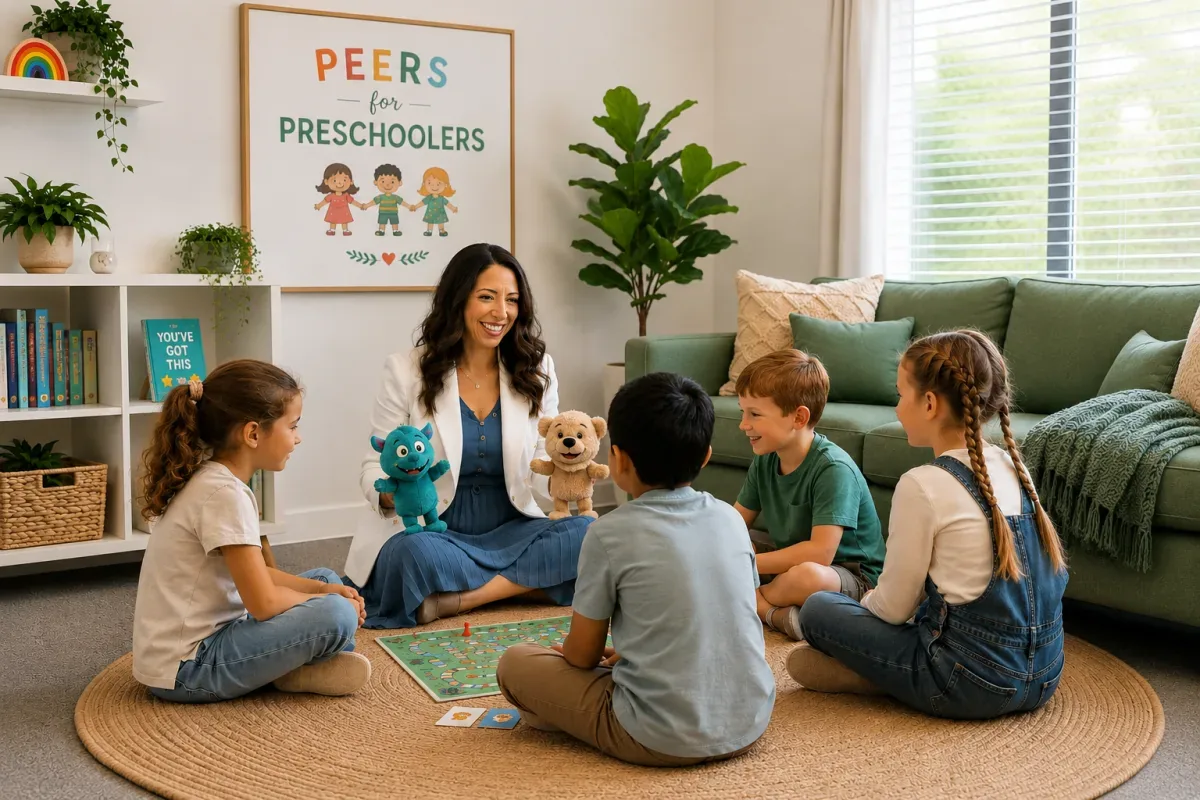
Through play-based activities, demonstrations and supported practice, sessions explore early friendship, communication and play skills, with parents involved in learning the strategies and supporting practice beyond the group.
- Play-Based Learning
- Early Social Skills
- Parent Involvement
- Practical Skill Practice
Why Early Social Learning Matters
Early Social Skills Create Foundations for Connection
The preschool years bring many of a child’s first experiences of navigating friendships and social situations more independently — joining play, sharing ideas, taking turns, responding when play changes and working out what to do when things don’t go as expected.
These early experiences provide important opportunities to learn and practise the social skills involved in playing, communicating and connecting with others. But not every child picks up these skills implicitly. Some children benefit when social information is made more explicit — when concepts are explained, demonstrated and practised rather than simply expected to be understood.
That is where PEERS® for Preschoolers takes a very practical approach. Puppets help make concepts concrete, familiar games and structured play create opportunities to practise, and parents participate alongside their child with facilitator support so the learning can continue beyond the group.
Program Suitability
Could PEERS® for Preschoolers Be a Good Fit for Your Child?
PEERS® for Preschoolers may be considered for children who would benefit from additional support learning and practising early social skills within a structured small-group environment.
Initiating or joining play with other children
Sharing, turn-taking and cooperative play
Managing frustration during social situations
Understanding social rules and group expectations
Developing confidence participating with peers
Preparing for or adjusting to more structured social environments such as school
Children do not need to experience difficulty in every area. Suitability is considered individually and may take into account the child’s age, communication, support needs, program goals and whether the group format is appropriate. An initial discussion with our team can help determine whether this program may be suitable.
Skills & Practice
Social Skills We Explore & Practise
Play & Joining In
Joining and participating in play
Sharing and turn-taking
Cooperative play
Responding to winning and losing during games
Communication
Greeting others
Asking for and offering help
Communicating during shared activities
Considering voice volume and personal space
Managing Social Moments
Strategies for responding to frustration during play
Navigating transitions
Following group expectations
Practising ways to respond when situations become difficult
Friendship Foundations
Positive interactions with peers
Staying engaged in shared activities
Practising skills for joining and maintaining play
Developing familiarity with common friendship skills
Why PEERS®?
What Makes This Program Different
PEERS® for Preschoolers combines structured social-skills teaching with play-based practice and active parent involvement, giving young children opportunities to learn skills in ways that are developmentally appropriate and connected to everyday life.
Structured & Explicit
Concepts are introduced clearly and in developmentally appropriate ways rather than expecting children to work everything out implicitly.
Puppets Bring Concepts to Life
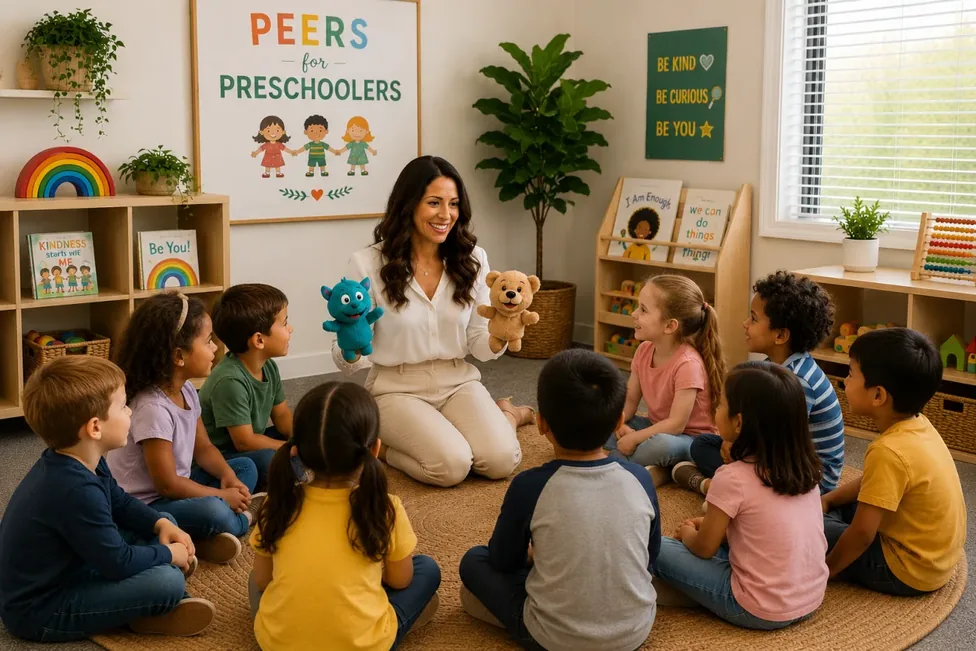
Facilitators use puppets to introduce, model and demonstrate concepts in ways that are concrete and engaging for young children.
Learning Through Games & Play
Familiar games, structured play and guided activities give children opportunities to practise skills while actively participating and having fun.
Parent-Assisted
Parents learn the strategies being introduced and how practice can continue between sessions.
Practice Beyond the Group
Home-based activities provide additional opportunities to revisit skills in familiar settings.
How It Works
What Sessions Can Look Like
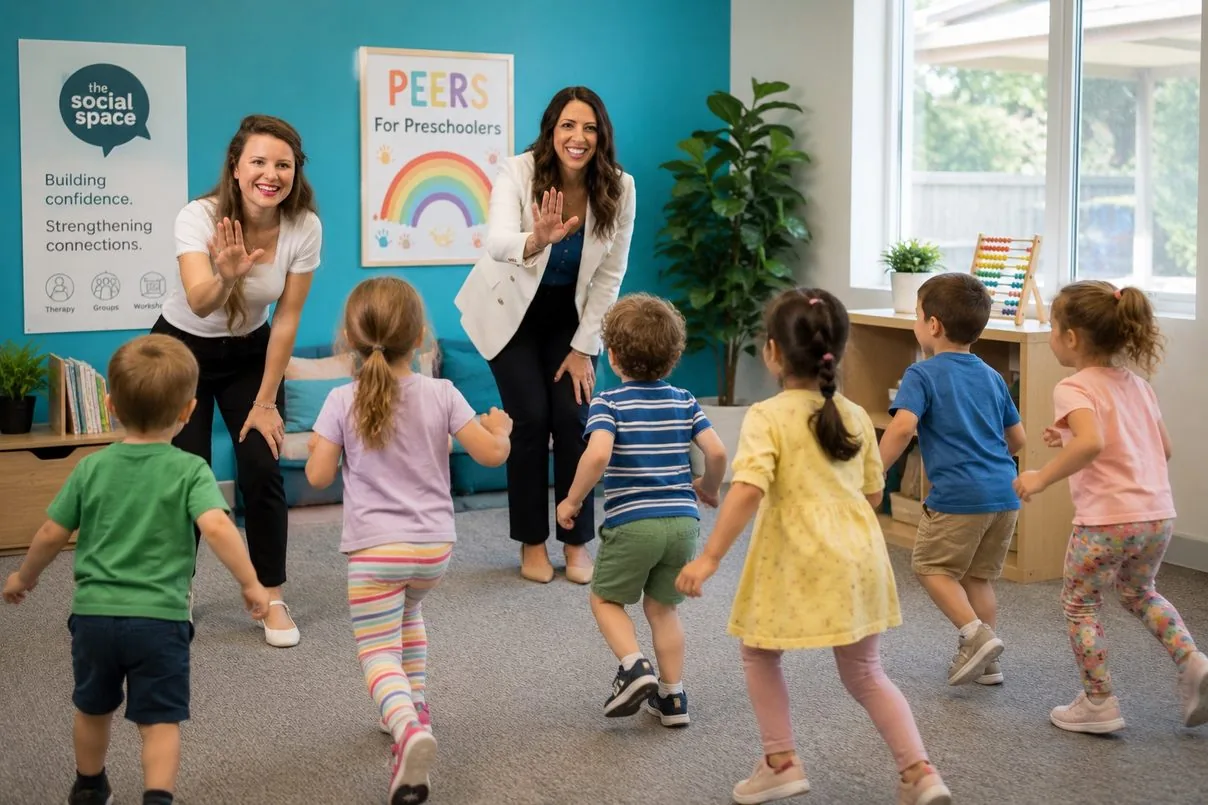
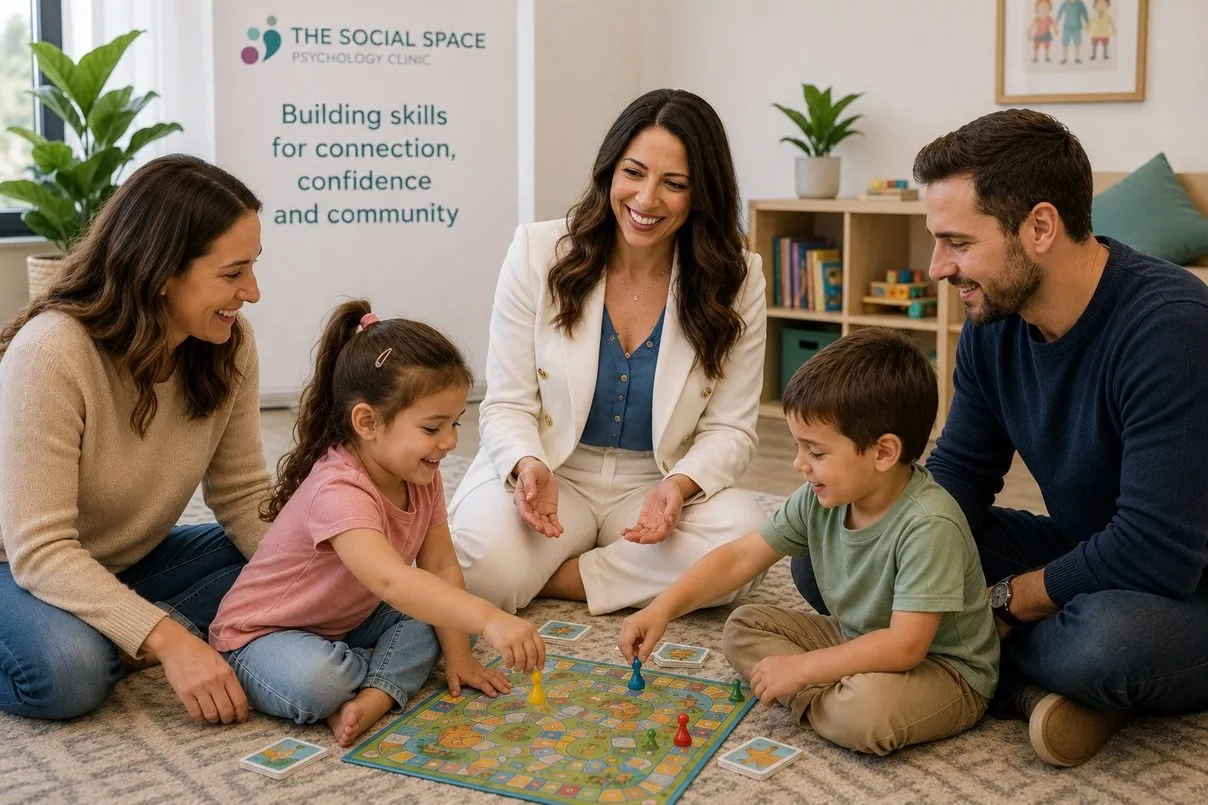
Sessions are active, structured and designed with young children in mind. Facilitators may use puppets to introduce and demonstrate concepts, followed by play, familiar children’s games, role-play and guided activities that provide opportunities to practise those ideas.
Games such as Simon Says and Red Light, Green Light can be incorporated into sessions to practise different skills in a familiar and enjoyable way.
- 01
Learn
Concepts are introduced through developmentally appropriate teaching, with puppets used to model and demonstrate what is being explained.
- 02
Practise
Play, familiar children's games, role-play and guided activities provide opportunities to practise those ideas within the group.
- 03
Parent Support
Parents learn strategies and participate in supported practice so they understand how skills are being taught.
- 04
Everyday Practice
Home-based activities provide additional opportunities to practise skills outside sessions.
Parent Involvement
Supporting Practice Beyond the Group
Parents are not observers in PEERS® for Preschoolers. A parent or carer attends every session, joins in the play and practises the week’s concepts alongside their child, with the facilitator on hand to help them apply the strategies as they go.
Each session also sets aside time for parents to talk through how practice went during the week, ask questions and work through anything that proved difficult. Parents leave with activities they can use at home, so children get further opportunities to practise in familiar everyday situations. No prior knowledge of the program is required.
Research & Evidence
What Does the Research Tell Us?
PEERS® for Preschoolers adapts the established UCLA PEERS® model for young children. Its evidence base is newer and smaller than the adolescent program's -- pilot studies and follow-up research rather than large randomised controlled trials -- and is best described as developing rather than extensive.
Key Research Findings
Social Skills & Peer Interaction
An initial pilot study reported improvements in child social skills alongside caregiver style and family-functioning measures following participation. (Factor et al., 2022 )
Parent Social Coaching
Parent involvement is central to the program. In follow-up interviews, most parents described continuing to use the social-coaching strategies taught in the program, in some cases years afterwards. (Tripathi et al., 2024 )
Longer-Term Maintenance
Parents followed up 1–5 years after the program reported that some social-related treatment gains were maintained, although not every change observed post-program persisted over time. (Tripathi et al., 2021 )
Telehealth Feasibility
A pilot study of a remote, parent-mediated telehealth version of the program reported it was feasible and acceptable to families, with increases in parents' confidence in social coaching. (Factor et al., 2022 )
Important Context
Research findings reflect outcomes observed across groups of participants and do not predict how an individual child will respond. Children differ in their strengths, developmental profile, support needs and opportunities for practice, and participation does not guarantee a particular outcome. Program suitability is considered individually.
The original PEERS® for Preschoolers program is delivered over 16 weeks. The Social Space uses a condensed 10-week delivery format, covering the program content over a shorter period. The published research above evaluated program formats that differ in duration from the format offered here, and those findings should not be read as outcome data for our condensed format.
For Schools & Early Learning
Looking for PEERS® for Preschoolers for Your School?
We deliver PEERS® for Preschoolers in schools and early-learning settings. The school page sets out how it runs in a setting — timetabling, the space needed, staff involvement and how parent/carer participation is planned.
Explore PEERS® for Preschoolers for Schools Talk to Our Team
Flexible Delivery
Where This Program Can Be Delivered
Mascot Clinic
Small-group, face-to-face delivery at The Social Space Psychology Clinic.
Schools & Early Learning
The program may also be delivered in collaboration with schools or early learning settings where appropriate.
Interested in PEERS® for Preschoolers?
Talk With Us About the Program
If you’re considering PEERS® for Preschoolers, our team can explain the program structure, participation requirements and upcoming intake, and discuss whether an initial consultation may be appropriate.
Enquire About This Program View Upcoming Programs Book a Free Consultation