

Social Space

Our Services

how we support you

A Different Approach to Psychological Care

We take a comprehensive and connected approach to psychological care - bringing together evidence-based therapy, assessment, and skill-based learning. Beyond individual sessions, our structured programs, workshops, and social groups create opportunities to practise, refine, and strengthen skills in real-life contexts. This integrated model supports individuals to build confidence, develop practical capability, and navigate everyday challenges with greater independence.

Individual Therapy

Psychological Therapy

Personalised one-to-one therapy for children, adolescents, and adults, focused on developing emotional awareness, strengthening social understanding, and building resilience, identity, and confidence - supporting individuals to navigate relationships and everyday challenges with greater ease.

Learn More

Workshops

Workshops & Bootcamps

Structured, psychologist-led workshops that provide focused opportunities to develop resilience, social understanding, and emotional awareness in an engaging, practical format.

Learn More

Group Programs

Group Programs

Structured social and emotional skills programs, including evidence-based approaches, that support individuals to build confidence, strengthen relationships, and develop practical skills to navigate everyday life with greater independence.

Learn More
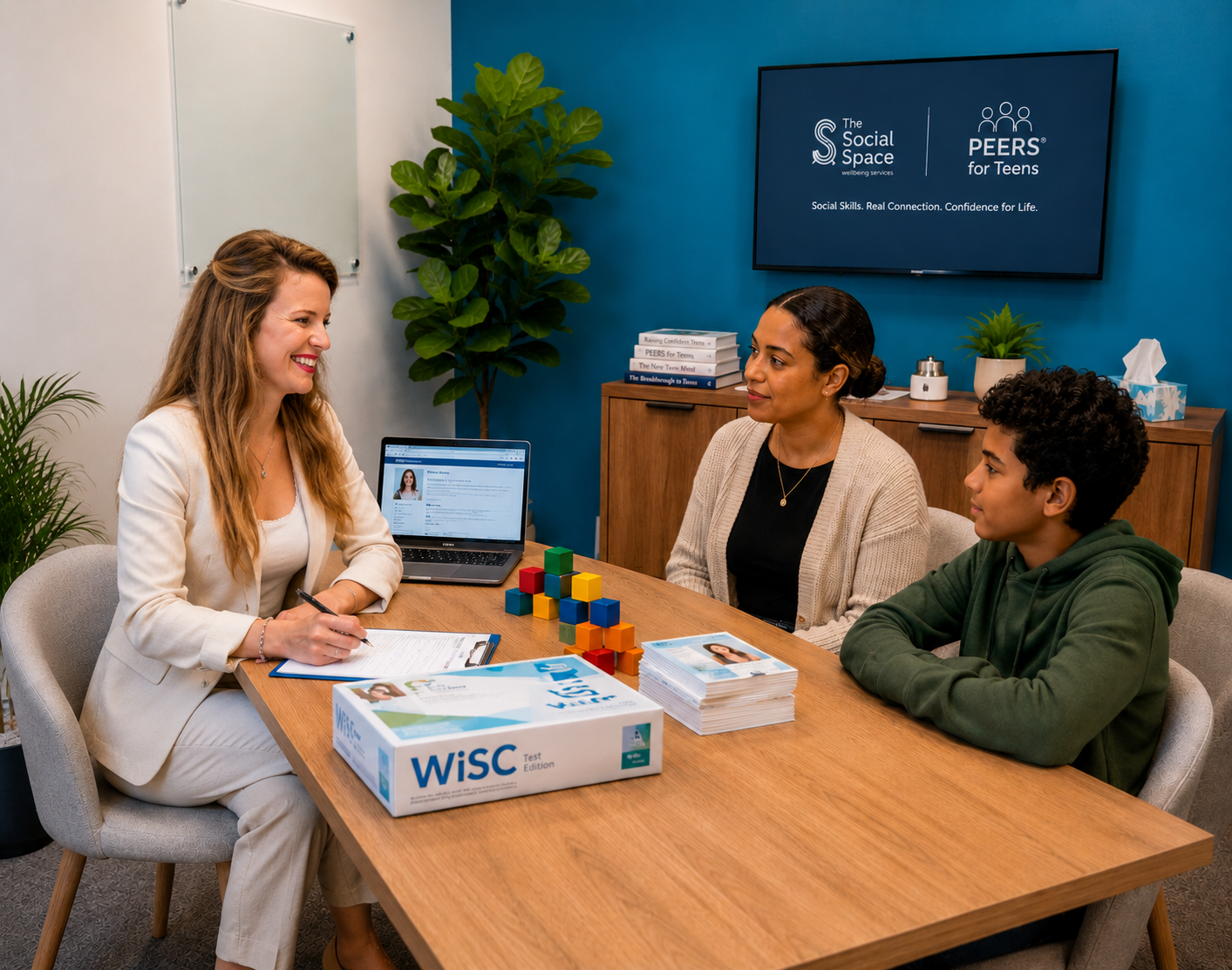
Diagnostic Assessments

Diagnostic Assessments

Comprehensive assessments for Autism, ADHD, and a range of emotional, behavioural, and developmental needs - providing clarity, understanding, and neuroaffirming recommendations to support individuals across home, school, and community environments.

Learn More

School Programs

School & Community Partnerships

We partner with schools and community organisations across Sydney to support students’ social and emotional development - fostering resilience, self-advocacy, and the ability to build and maintain healthy relationships.

Learn More

Gaming Club Psychology

Gaming Club

A structured, interest-based group that uses guided gameplay to support social connection, communication, and teamwork - helping participants build confidence and resilience in an engaging, real-world context.

Learn More

Frequently Asked Questions.

Therapy Services

What can I expect in the first therapy session?
The first session focuses on understanding your concerns, goals, and what has been happening recently. Your psychologist will ask questions to get a clear picture of your needs and discuss what therapy might look like moving forward. It’s also a chance for you to ask questions and decide whether the approach feels like a good fit.
How long are therapy sessions?
Most sessions run for 50 minutes, although this may vary depending on the type of service or the needs of the client. Your psychologist will let you know if a different session length is recommended.
How often will I need to attend therapy?
Frequency depends on your goals, preferences, and the type of support you’re seeking. Many clients attend weekly or fortnightly, while others prefer a different rhythm. Your psychologist will collaborate with you to find a schedule that feels manageable and helpful.
How long does therapy usually take?
There is no set timeframe. Some people attend for a short period to focus on a specific concern, while others prefer longer-term support. Your psychologist will check in regularly to review progress and ensure therapy continues to align with your goals.
Do you offer therapy for children, teens, and adults?
Yes. Our team includes psychologists experienced in supporting children, adolescents, and adults. We tailor our approach to each person’s developmental stage, communication style, and individual needs.
What therapeutic approaches do your psychologists use?
Our clinicians draw on evidence-informed approaches such as Cognitive Behaviour Therapy (CBT), Acceptance and Commitment Therapy (ACT), Dialectical Behaviour Therapy (DBT) skills, trauma-informed practice, and strength-based, neurodiversity-affirming frameworks. Your psychologist will explain what they use and why, and will always adapt strategies to your goals.
Can I be involved in my child’s therapy?
Absolutely. Parent involvement is often an important part of supporting children and young people. Your psychologist may invite you to join parts of sessions, attend parent-only consultations, or practise strategies at home. The level of involvement depends on your child’s age, preferences, and therapeutic goals.
Do you provide telehealth sessions?
Yes. Telehealth is available for many therapy services and can be a flexible option for families or individuals who prefer online support. Your psychologist can help you decide whether telehealth is suitable for your needs.
What if my child or I feel nervous about starting therapy?
It’s completely normal to feel unsure or nervous. Your psychologist will take time to build comfort, explain what to expect, and move at a pace that feels safe. You’re welcome to share any concerns at any time.
Can therapy help with school, work, or daily life challenges?
Therapy can support people to explore their experiences, understand patterns, and develop practical strategies that may be helpful in daily life. Your psychologist will work with you to identify what matters most and tailor sessions accordingly.
Do you offer reports or letters?
Yes. If you need a report or letter (for school, workplace, NDIS, or other supports), your psychologist can discuss what is required. Additional fees may apply depending on the time involved.
What if I need to cancel or reschedule a session?
We understand that things come up. Our cancellation policy is designed to ensure fair access to appointments. Please contact us as early as possible if you need to make a change.
Is therapy confidential?
Yes. Psychologists follow strict confidentiality requirements. There are some legal exceptions such as safety concerns, which your psychologist will explain in your first session.
Do you offer Medicare rebates?
If you have a valid Mental Health Treatment Plan from your GP, you may be eligible for Medicare rebates for individual therapy sessions. Our admin team can help you understand how rebates work and what to expect.
Can I use NDIS funding for therapy?
We provide therapy for self-managed and plan-managed NDIS participants. If you are unsure whether therapy fits within your plan, we can help you understand your options.

Getting Started.

How do I know if therapy is right for me or my child?
Many individuals seek support when they notice challenges with emotions, behaviour, social connections, anxiety, or major life transitions. You don't need to wait for a crisis to seek help; proactive support helps build the resilience and skills needed to navigate life more confidently.
What happens in the first appointment?
The initial session is a comprehensive assessment. We explore your concerns, history, strengths, and goals. This collaborative conversation allows us to develop a personalised plan tailored to your specific needs.
How long does therapy usually take?
Duration varies based on individual goals. Some clients benefit from short-term, skills-focused support (6-10 sessions), while others prefer longer-term therapeutic engagement. Your psychologist will discuss a recommended timeframe after your assessment.
Do parents attend sessions?
For children, parent involvement is crucial for lasting change. This may involve direct participation in sessions or separate guidance sessions. For teens and adults, sessions are typically individual, with collaborative check-ins for families where appropriate and agreed upon.

Our Approach.

What types of therapy do you use?
We use evidence-based modalities including Cognitive Behavioural Therapy (CBT), Acceptance and Commitment Therapy (ACT), Dialectical Behaviour Therapy (DBT), and neuroaffirming social/emotional interventions.
Do you support neurodivergent individuals?
Yes. We have extensive experience supporting neurodivergent people (Autism, ADHD, sensory differences). Our approach is neuroaffirming, focusing on understanding individual profiles and building on strengths rather than "fixing" differences.

Funding & Rebates.

Do you accept NDIS funding?
Yes, we support self-managed and plan-managed NDIS participants. Psychology services are typically funded under "Capacity Building - Improved Daily Living" or "Social Participation."
Can I receive a Medicare rebate?
Yes. With a valid Mental Health Treatment Plan from a GP or specialist, you can claim rebates for up to 10 individual sessions per calendar year. We also provide rebates for eligible group programs.
Do I need a referral to book?
No referral is required to book as a private client. However, you will need a formal referral and Mental Health Treatment Plan from your doctor if you wish to claim Medicare rebates.

Before You Book.

What if I (or my child) am nervous about talking?
That is completely normal. Our therapy space is designed to be low-pressure. For children, we use play and creative activities. For adults and teens, we move at your pace to ensure you feel safe and understood before diving into deeper work.

Still Have Questions?

If you are unsure whether our services are the right fit, our team is here to help.

📩 Contact our clinic to learn more or book an assessment.