Social Skills Program | 7–12 Years
Minecraft® Social Skills Program
Where a Shared Interest Becomes an Opportunity to Connect
For some children, Minecraft® is more than a game. It may be a place where they feel confident, creative and capable — even when face-to-face social situations can feel much harder to navigate.
Your child might love talking about Minecraft® but find conversations with peers more difficult. They may want friendships but struggle with teamwork, compromise, flexible thinking, sharing ideas or managing frustration when things do not go according to plan.
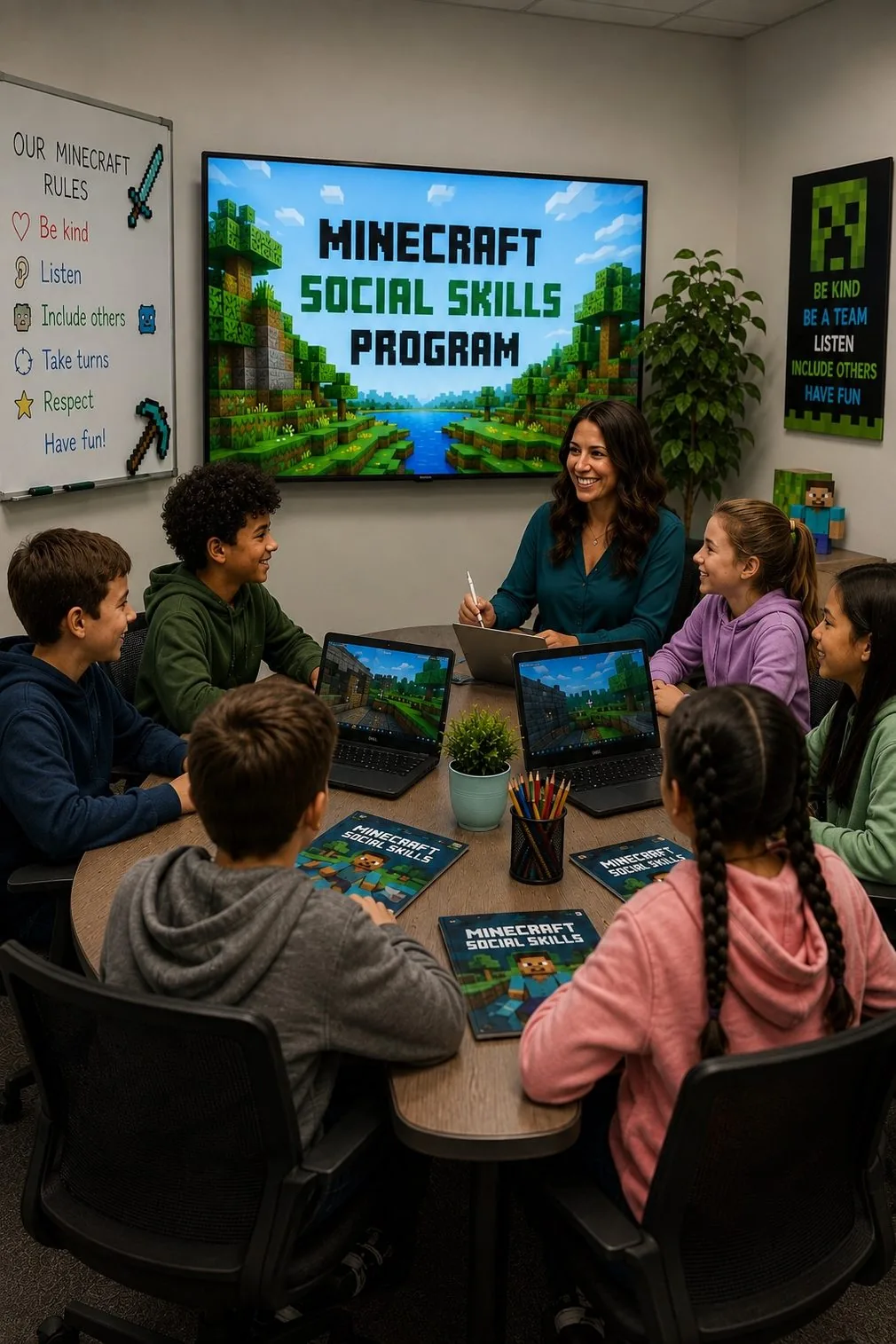
The Minecraft® Social Skills Program uses this existing interest as a shared environment for connection. In a small, facilitated group, children work together on Minecraft® challenges, collaborative builds and shared goals while practising communication, teamwork, problem-solving, negotiation and flexible thinking in real time.
It is not simply a group of children playing Minecraft®. The game provides the environment. The therapeutic value comes from the structured activities, peer interaction, skilled facilitation, reflection and opportunities to practise social strategies as situations naturally arise.
- Gamified Social Learning
- Teamwork & Collaboration
- Real-Time Interaction
- Facilitator-Guided
About the Program
More Than Just Playing Minecraft®
Minecraft® provides a naturally engaging environment in which children can create, communicate, solve problems and work towards shared goals. Within the Minecraft® Social Skills Program, these opportunities are deliberately structured.
Children participate in collaborative builds, assigned roles, group challenges and guided activities that require them to communicate ideas, listen to others, negotiate, problem-solve and adapt when plans change.
The facilitator observes and supports interactions as they occur, helping children notice social situations, explore different strategies, repair misunderstandings and reflect on what happened.
This allows social learning to occur within an activity that may already feel meaningful and motivating to the child.
Program Suitability
Could Minecraft® Social Skills Be a Good Fit for Your Child?
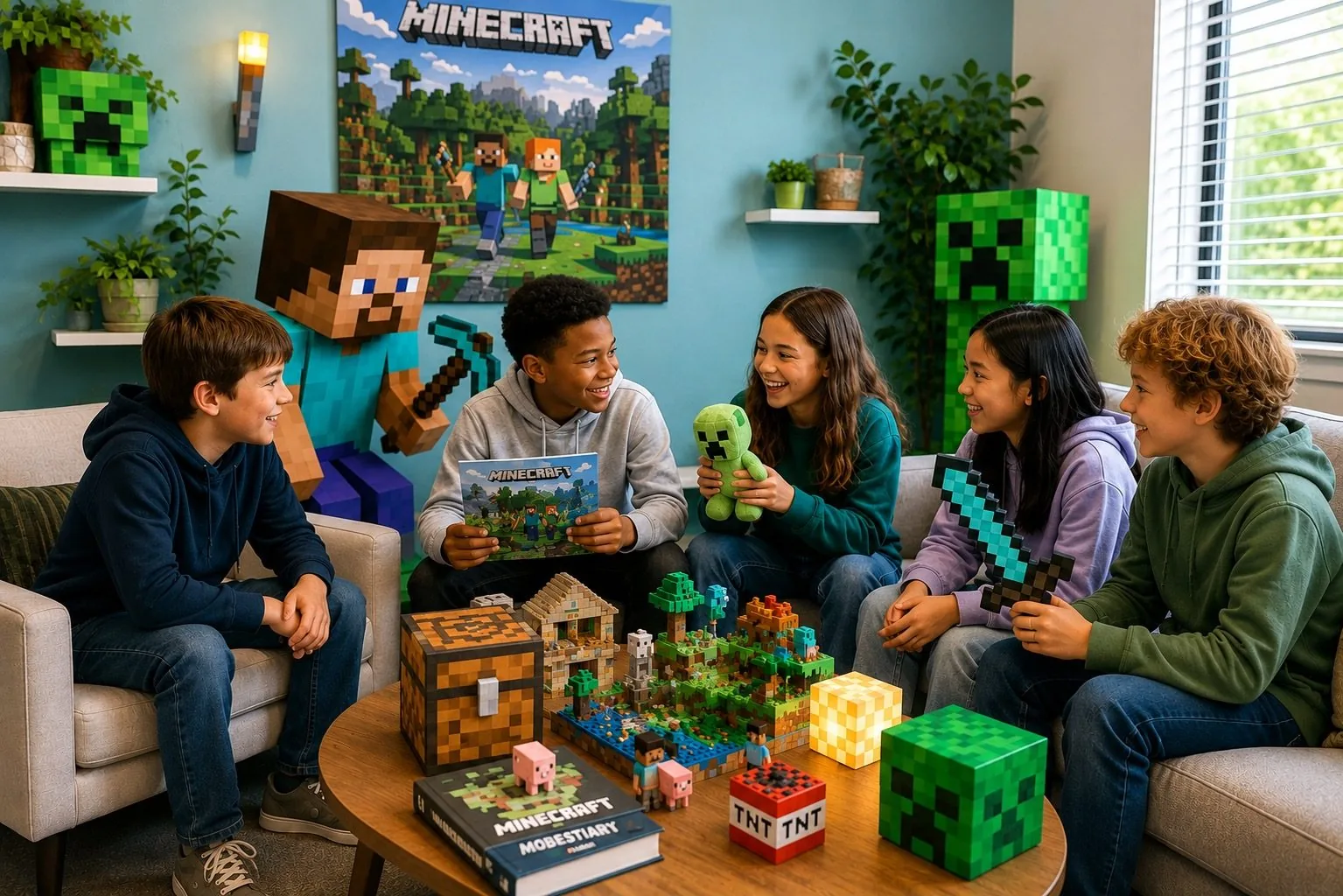
Minecraft® Social Skills may be considered for children who enjoy Minecraft® and would benefit from supported opportunities to practise communication, collaboration and social problem-solving with peers.
Having a strong interest in Minecraft® that may provide a meaningful context for social participation
Difficulty compromising or negotiating
Difficulty communicating ideas clearly within a group
Wanting friendships but finding peer interaction difficult
Wanting to lead every activity, or finding it difficult when someone else leads
Difficulty coping when plans change
Becoming frustrated when others have different ideas
Difficulty working collaboratively with other children
Becoming overwhelmed by disagreement or unexpected problems
Finding face-to-face social-skills activities difficult to engage with
Challenges listening and responding to other children's ideas
Children do not need to experience difficulty in every area. Suitability is considered individually, including the child’s interests, strengths, goals, support needs and whether the current group is likely to provide an appropriate environment for participation and learning.
Skills & Practice
Practising Social Skills Through Shared Play
Communication
Sharing ideas
Listening and responding
Explaining plans
Asking questions
Checking shared understanding
Collaboration
Working towards shared goals
Taking different roles
Contributing to group builds
Sharing responsibility
Supporting other group members
Flexibility & Negotiation
Considering different ideas
Compromising
Adapting plans
Navigating disagreement
Coping when a preferred idea is not chosen
Social Problem-Solving
Noticing problems as they arise
Considering possible solutions
Repairing misunderstandings
Managing frustration
Trying alternative strategies
How It Works
Build. Collaborate. Reflect. Apply.
- 01
Build
Children participate in structured Minecraft® activities, collaborative builds and shared challenges.
- 02
Collaborate
Activities create natural opportunities for communication, teamwork, negotiation, role-sharing and joint problem-solving.
- 03
Reflect
The facilitator supports children to notice what happened during interactions, explore different strategies and consider what they might try next time.
- 04
Apply
Children are encouraged to recognise where relevant communication, flexibility and problem-solving strategies may also be useful outside the Minecraft® environment.
Parent & Carer Involvement
Helping Parents Understand the Learning Behind the Game
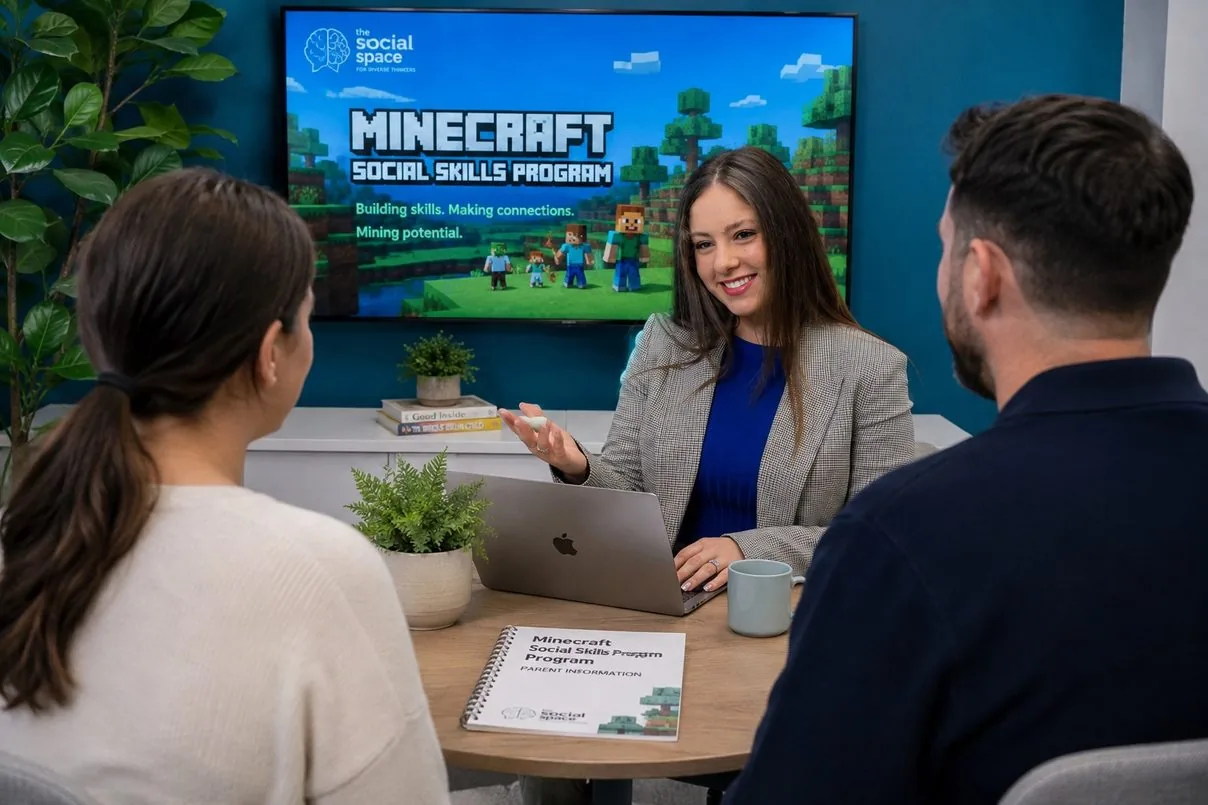
Parents/carers participate in three feedback sessions across the program. These sessions provide opportunities to discuss the skills and strategies being explored, observations from the group, the child’s strengths, and areas that may benefit from additional support.
They’re also a chance to talk through ways relevant strategies may be supported outside sessions, and to ask questions about your child’s participation.
Why This Program?
What Makes This Program Different
Starts With an Existing Interest
Minecraft® can provide a familiar, motivating environment for children who already enjoy the game.
Social Learning Happens in Real Time
Collaboration creates naturally occurring moments involving communication, negotiation, flexibility and problem-solving.
Structured, Not Free Play
Activities, roles and challenges are intentionally planned and facilitated rather than simply providing unrestricted gaming time.
Practise, Not Just Discuss
Children have opportunities to try strategies while actually interacting with peers.
Strengths-Based Participation
Children can bring existing Minecraft® knowledge, creativity and interests into the group rather than leaving those strengths at the door.
Research & Evidence
What Does the Research Tell Us?
Research examining Minecraft® as a facilitated therapeutic and social-learning environment is still developing. Emerging studies and clinical literature have explored how Minecraft® may provide an engaging and flexible context for neurodivergent children to interact, collaborate, communicate and practise social strategies.
Importantly, this research relates to Minecraft®-based and therapeutically facilitated gaming approaches more broadly. It does not establish that The Social Space Minecraft® Social Skills Program itself produces a particular clinical outcome.
Key Research Findings
Facilitated Social Practice
Clinical and method literature describe therapeutically applied Minecraft® groups as providing opportunities for peer connection and social practice within a facilitated environment, particularly for neurodivergent young people. (Kilmer et al., 2024 )
Collaboration & Accessibility
A pilot study of 11 autistic children aged 10–12 examined Minecraft® as a game-based context for social collaboration across in-person and online formats. Quantitative changes in social-skills scores were not statistically significant, and parent and child reports of social competence were mixed; qualitative findings highlighted aspects of engagement, collaboration and accessibility. (Thirumanickam et al., 2026 )
Naturalistic, Interest-Based Participation
A realist evaluation of a gaming-based program for autistic young people suggested that shared interests, opportunities to take an expert role, and participation in a motivating environment may support opportunities for communicating wants and needs. (Black et al., 2025 )
Therapeutic Use of Minecraft®
Clinical literature has also described Minecraft® being adapted as a therapeutic medium in family therapy involving autistic children and children with ADHD, including activities involving perspective-taking, reflection and communication. (Finch & Rivett, 2026 )
Important Context
Research into Minecraft®-based therapeutic and social programs remains emerging. Existing studies vary in design, population, format and outcomes, and findings cannot be assumed to apply directly to this program or to an individual child. Participation in Minecraft® Social Skills does not guarantee a particular outcome. Program suitability is considered individually.
Flexible Delivery
Where This Program Can Be Delivered
Mascot Clinic
Structured sessions delivered face-to-face within a supportive, facilitated environment at The Social Space Psychology Clinic.
Online / Telehealth
Flexible sessions using structured online gameplay to support engagement, where clinically appropriate.
Program availability, delivery format and intake dates may vary. Contact our team for current information.
Want to Learn More About the Minecraft® Social Skills Program?
Our team can discuss your child’s interests and support needs, whether the program may be suitable, and upcoming group availability.
Minecraft® is a trademark of Mojang Studios. The Social Space Minecraft® Social Skills Program is independently delivered and is not affiliated with or endorsed by Mojang Studios or Microsoft.