
School Workshop | High School
Building Healthy Relationships
Friendship can change during adolescence. Attraction appears. Relationships become more complex. Communication moves between face-to-face conversations, messaging, group chats and social media. And suddenly young people are expected to understand a whole collection of rules that nobody necessarily explains.
Building Healthy Relationships makes important information about relationships, boundaries, consent, privacy and personal safety explicit. Designed with neurodivergent teenagers in mind, the workshop creates a structured and respectful environment where young people can explore these topics without being expected to already know the answers.
Some things are too important to leave as unwritten rules.
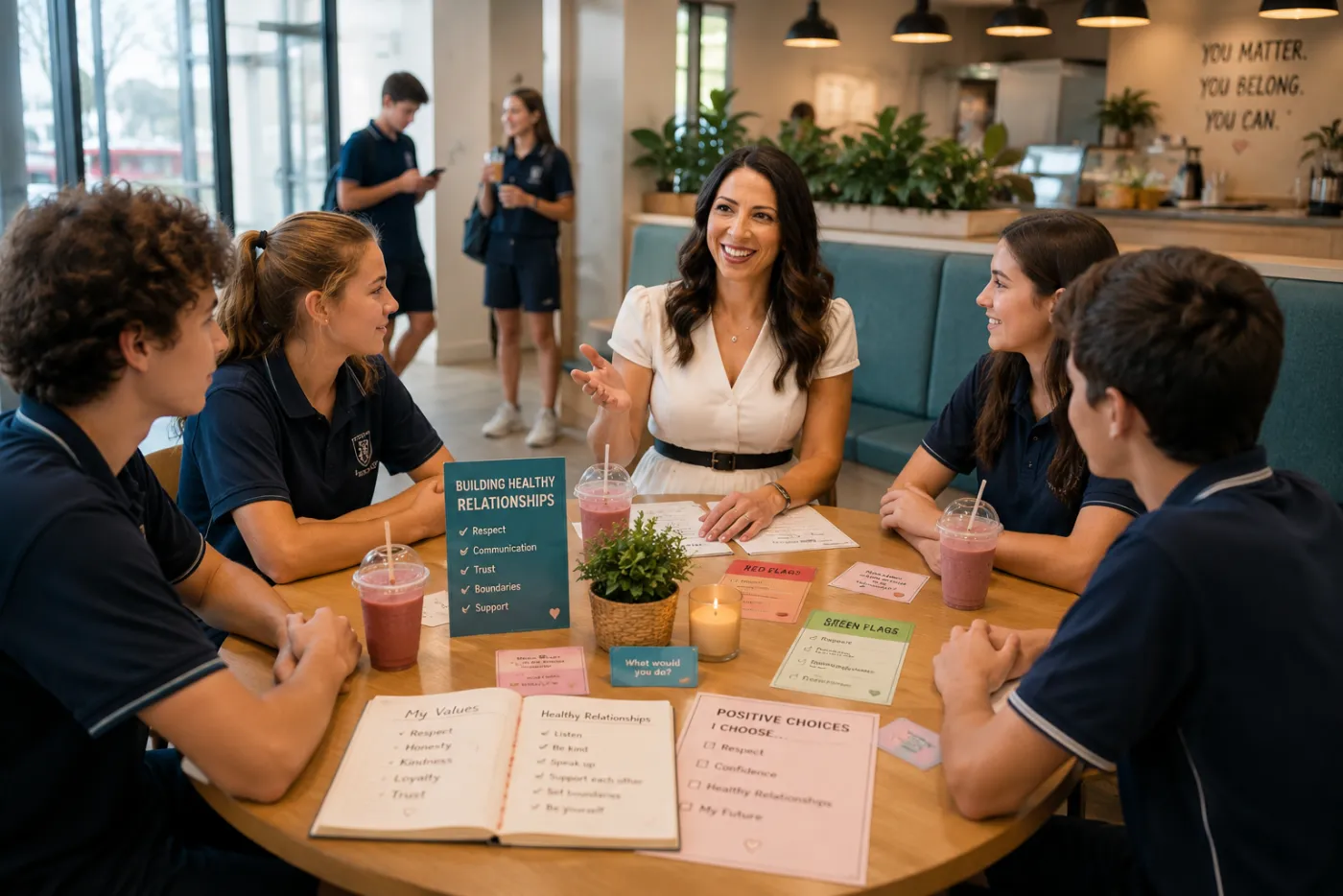
Making the Implicit Explicit
Young People Shouldn’t Have to Guess the Rules
Teenagers receive information about relationships from everywhere — friends, television, social media, gaming and online communities, movies, sexualised online content and other teenagers. Not all of that information is accurate, and much of it is contradictory.
At the same time, young people are often expected to somehow understand when someone is interested, when they are not, what counts as consent, how to communicate a boundary, how to respond to someone else’s boundary, what should remain private, what is safe to share online, and when something in a relationship is not okay.
Building Healthy Relationships creates structured opportunities to make these ideas explicit.
What We Explore
Relationships Are More Than Dating
Relationships & Attraction
Different kinds of relationships
Friendship and romantic interest
Attraction
Communicating interest respectfully
Recognising when interest is not mutual
Responding to rejection
Healthy and unhealthy relationship behaviours
Boundaries & Consent
Personal boundaries
Recognising another person's boundaries
Consent
Personal space and physical contact
Saying no
Responding when another person says no
Recognising pressure or coercion
Privacy & Digital Relationships
Privacy
Public and private behaviour
Messaging and group chats
Social media and online friendships
Sexting and image sharing
Sharing personal information
Blocking and reporting
Personal Safety & Support
Recognising concerning behaviour
Knowing when something feels unsafe
Seeking help
Identifying trusted adults
Communicating boundaries
Accessing support
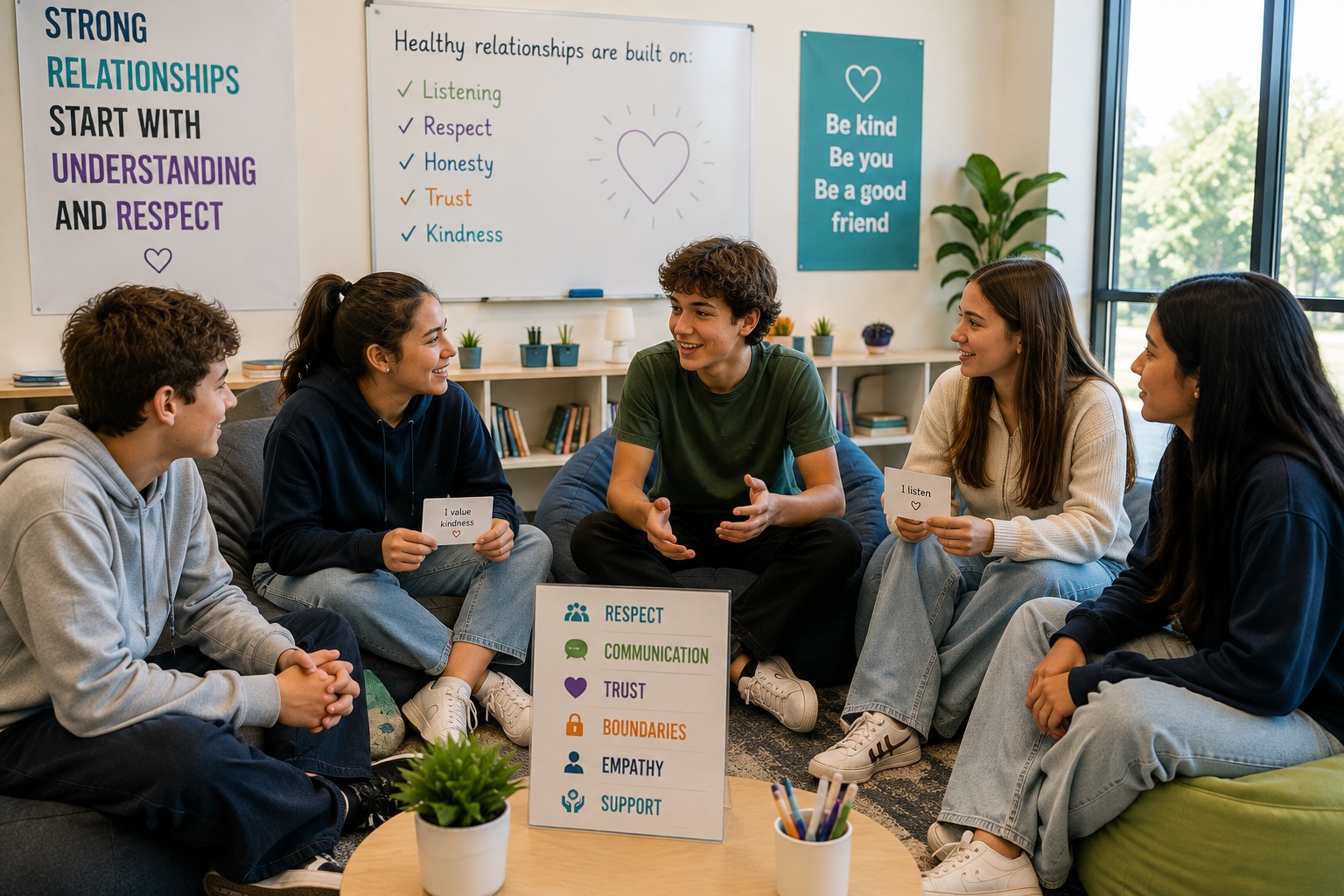
Inside the Workshop
Concepts Explained, Not Assumed
Using discussion, scenarios and structured activities, the workshop makes ideas like consent and boundaries explicit rather than something students are expected to infer. Participants explore what consent involves, how to recognise and communicate their own boundaries as well as respecting other people’s, how to navigate attraction and the possibility of rejection respectfully, and how those same principles carry over into messaging, social media and other digital relationships.
Scenarios and general discussion mean participants can explore these ideas without being asked to disclose their own relationships, experiences or private information.
Could This Be a Good Fit?
Making the Unspoken More Explicit
Neurodivergent teenagers are capable of meaningful friendships, romantic relationships and sexual relationships, and deserve access to clear information about those experiences — not because they are assumed incapable of understanding relationships, but because important information should not be hidden inside social rules they are simply expected to infer. The workshop respects different identities, communication styles, sexual orientations, gender identities, relationship preferences and neurotypes.
This workshop may be worth discussing if your school or organisation is looking for an explicit, structured and neurodiversity-affirming way to explore relationships, consent, boundaries and personal safety with secondary-school students. It may suit:
Planning the Workshop
Start With What Your Students Need to Understand
- 01
Talk With Us
Tell us about the student group, age range and what has prompted the enquiry.
- 02
Identify Priorities
Discuss the relationship, consent, boundary, digital or safety topics most relevant to the group.
- 03
Plan the Format
Agree on duration, setting, accessibility considerations and practical delivery.
- 04
Deliver
The Social Space psychologist facilitates an interactive, structured workshop.
- 05
Next Steps
Where appropriate, schools can discuss additional education, consultation or related programs with The Social Space.
Because this workshop can involve sensitive topics, we discuss student age, intended learning goals, relevant school policies, accessibility, and how students can access support if questions arise. This workshop does not include a mandatory parent component — parent or community education can be arranged separately if requested.
Want to Learn More About Building Healthy Relationships?
Tell us about your students, their age group and what you would like the workshop to cover. Our team can discuss the most appropriate content, duration and delivery format for your school or community.