
Social Skills Program | Year 7+
PEERS® for Teenagers — Making the Unwritten Rules Explicit
Helping Teenagers Navigate Friendships & the Social World
The teenage social world can be complicated.
Friendship groups change. Conversations become more nuanced. Texting and social media add another layer of communication. Teasing, disagreements, rumours and the pressure to fit in can make relationships increasingly difficult to navigate.
For some teenagers, knowing what to say, how to join a conversation, how to make or maintain friendships, or what to do when something goes wrong socially doesn’t come naturally.
Parents often see the impact at home — a teenager who wants friends but feels left out, repeatedly experiences friendship difficulties, becomes anxious about social situations, or simply seems unsure how to navigate the unwritten social expectations their peers appear to understand.
This is why we offer PEERS® for Teenagers — a structured, practical program that makes these social strategies more explicit and gives teenagers opportunities to learn and practise them.
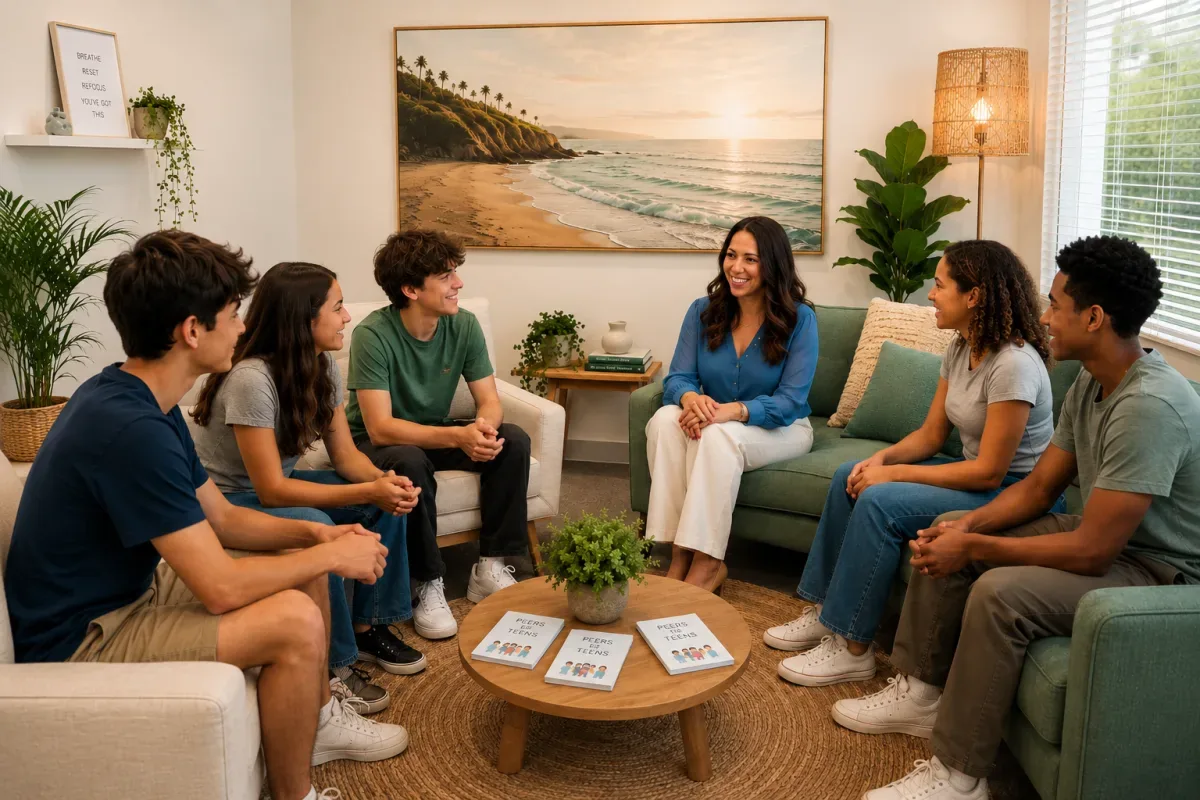
- Evidence-Based
- Real-World Skills
- Parent-Supported
- Practical Skill Practice
About the Program
Social Skills for Real Teen Life
Adolescence brings increasingly complex social situations — from conversations and friendships to group dynamics, online communication, disagreements, teasing and organising time with friends.
PEERS® provides a structured environment where teenagers are introduced to practical strategies for navigating these situations and have opportunities to practise them through role-play, behavioural rehearsal and activities between sessions.
Rather than assuming teenagers will simply “pick up” unwritten social expectations, the program makes social strategies explicit, practical and easier to understand and practise.
Program Suitability
Could PEERS® for Teenagers Be a Good Fit for Your Teen?
PEERS® for Teenagers may be considered for adolescents who would benefit from structured, practical support to understand and practise social skills and who are able to participate in the group and between-session practice.
Finding it difficult to make or maintain friendships
Uncertainty or anxiety in social situations
Difficulty navigating conversations or reciprocal interaction
Challenges managing disagreements, teasing or peer dynamics
Feeling isolated or unsure how to connect with peers
Wanting practical guidance for navigating common social situations
Teenagers do not need to experience difficulty in every area. Suitability is considered individually, including the young person’s goals, willingness to participate, support needs and whether the current group is likely to provide an appropriate learning environment.
Skills & Practice
Practical Skills for Everyday Social Situations
Conversations & Connection
Starting and maintaining two-way conversations
Identifying shared interests
Entering and exiting conversations
Developing and maintaining friendships
Social Communication
Using humour appropriately
Communicating online and via text
Organising and hosting get-togethers
Demonstrating good sportsmanship
Navigating Social Challenges
Responding to teasing and embarrassing feedback
Managing disagreements and conflict
Navigating rumours and gossip
Strategies for bullying and reputational challenges
Understanding Friendship Dynamics
Recognising common friendship expectations
Exploring reciprocal social interaction
Practising skills across different social contexts
Increasing familiarity with common peer situations
Why PEERS®?
What Makes This Program Different
PEERS® combines explicit social-skills teaching with rehearsal, real-world practice and active parent/carer involvement. Rather than focusing only on discussing social difficulties, the program provides practical strategies and structured opportunities to practise them.
Structured & Explicit
Social strategies and unwritten social expectations are broken down into practical, understandable steps.
Real-World Focus
Skills address situations teenagers encounter in everyday life, including friendships, conversations, online communication, disagreements and peer dynamics.
Practise, Not Just Discuss
Role-play, behavioural rehearsal and between-session activities provide opportunities to practise strategies.
Parents as Social Coaches
Parents and carers attend concurrent sessions and learn strategies for supporting practice beyond the group.
Get-Togethers
Planning and practising get-togethers provides a structured opportunity to apply relevant skills outside the group.
Developed at UCLA
PEERS® was developed at UCLA and has been studied as a structured social-skills intervention for adolescents.
How It Works
Learn. Practise. Apply.
- 01
Learn
Practical social strategies are introduced through structured teaching and demonstrations.
- 02
Rehearse
Role-play and behavioural rehearsal provide opportunities to practise strategies during sessions.
- 03
Social Coach Support
Parents and carers learn the strategies concurrently in their own session, and each week review how the last practice task went, troubleshoot what got in the way and plan the next one.
- 04
Real-World Practice
Between-session activities provide opportunities to apply relevant skills in everyday social situations.

Parent & Carer Involvement
Supporting Skills Beyond the Group
Parent and carer involvement is a core component of PEERS® for Teenagers. While teenagers participate in their group session, parents and carers attend concurrent sessions where they learn the same strategies and how to support their use between sessions.
Each session also sets aside time to review how the week’s practice actually went — what worked, what did not, and what got in the way — so parents and carers can ask questions, troubleshoot difficulties and think through how to support the next practice task.
The aim is not for parents to manage their teenager’s social life, but to provide informed support, coaching and opportunities for practice as teenagers navigate increasingly independent social experiences. The teenager stays central to their own friendship choices, social goals and preferences.
No prior knowledge of PEERS® is required.
For Schools & Early Learning
Looking for PEERS® for Teenagers for Your School?
We deliver PEERS® for Teenagers in secondary schools. The school page sets out how it runs — timetabling, the room, staff involvement and how the social-coach component is planned around the school day.
Research & Evidence
What Does the Research Tell Us?
PEERS® for Teenagers has been evaluated across multiple studies, including a randomised controlled trial, an independent replication, and an international adaptation, examining social skills, social responsiveness and friendship-related outcomes.
Key Research Findings
Social Skills & Knowledge
Studies have reported improvements in social-skills knowledge and aspects of social functioning, including social communication, cooperation and assertion, following participation in PEERS® for adolescents. (Laugeson et al., 2012 ; Schohl et al., 2014 )
Social Responsiveness
Research has reported reductions in features associated with social-communication impairment on standardised measures of social responsiveness. (Laugeson et al., 2012 )
Friendship & Social Engagement
Studies have reported increases in the frequency of hosted get-togethers and other social engagement following participation, although findings vary across studies and outcome measures. (Laugeson et al., 2012 ; Schohl et al., 2014 )
International Replication
PEERS® for adolescents has been independently replicated outside the United States, including a randomised controlled trial of the Korean-language version. (Yoo et al., 2014 )
Important Context
Research findings describe outcomes observed across groups of participants and do not predict how an individual teenager will respond. Outcomes may vary according to individual needs, participation and opportunities for practice. Program suitability is considered individually.
The original PEERS® for Teenagers program is delivered over 14 weeks. The Social Space uses a condensed 10-week delivery format, covering the program content over a shorter period. Published PEERS® research has evaluated program formats that differ in duration from the format offered here, and describes the studied protocols rather than our condensed delivery.
Flexible Delivery
Where This Program Can Be Delivered
Mascot Clinic
Structured face-to-face group sessions for teenagers and concurrent parent/carer sessions.
Online / Telehealth
Selected program delivery may be available online, with parent/carer participation incorporated into the format.
Schools
PEERS® may also be delivered in collaboration with schools where appropriate.
Program availability, delivery format and intake dates may vary. Contact our team for current information.
Want to Learn More About PEERS® for Teenagers?
Our team can discuss your teenager’s needs, whether the program may be suitable and upcoming group availability.