
PEERS® Bootcamp | Bullyproof
“Just Ignore It” Isn’t Always Enough
Teasing. Rumours. Being left out. Embarrassing comments. Hostile messages. Bullying that moves between school, group chats, social media and gaming. When a peer situation becomes difficult, knowing what to do next is not always obvious.
The PEERS® Bullyproof Bootcamp provides young people with practical strategies for recognising and responding to different peer situations. Across two interactive days, participants explore response options through explicit teaching, demonstrations, scenarios and supported practice — while keeping safety and adult support central.
More options for difficult situations. Not more responsibility for the person being targeted.
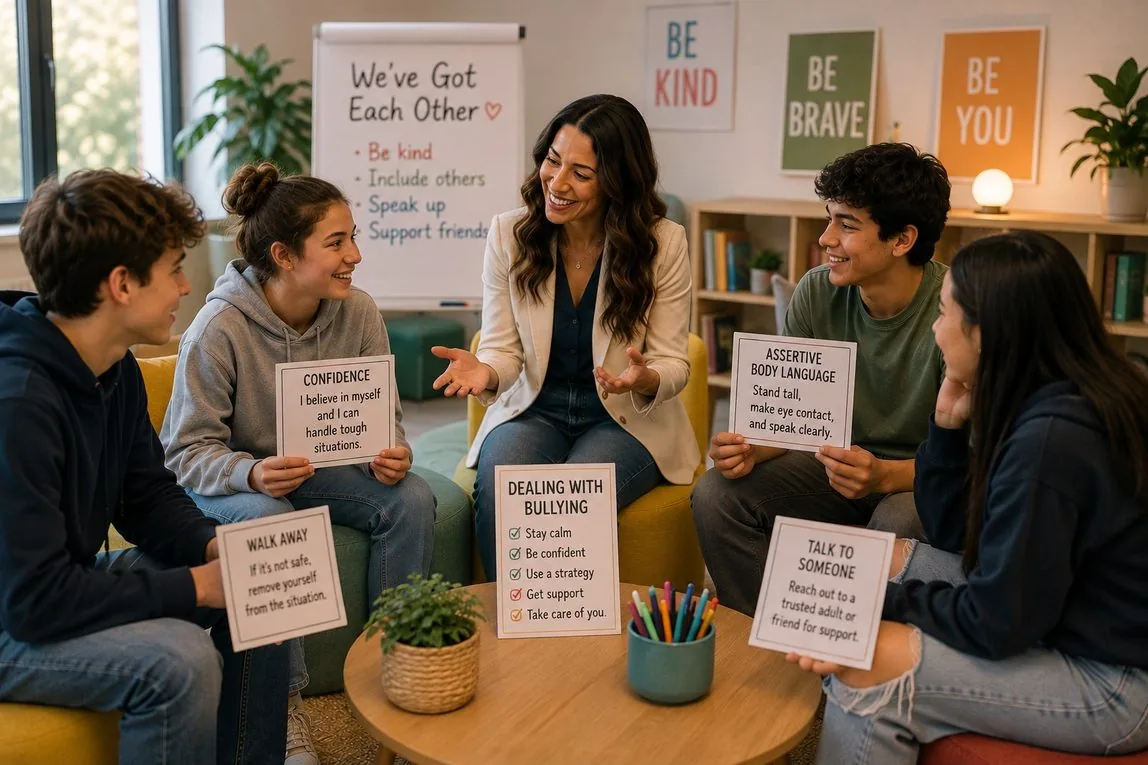
Difficult Peer Situations
First Work Out What’s Happening — Then Consider What Might Help
Not every uncomfortable peer interaction is the same. Friendly joking is different from teasing. An argument is different from repeated bullying. Embarrassing feedback is different from deliberate humiliation. A disagreement between friends is different from social exclusion.
Understanding what may be happening can help a young person consider what response options they have, whether disengaging may help, whether they need support, and when the situation requires adult intervention.
Different situations may need different responses. If something feels unsafe, threatening or difficult to manage, seeking adult support remains appropriate.
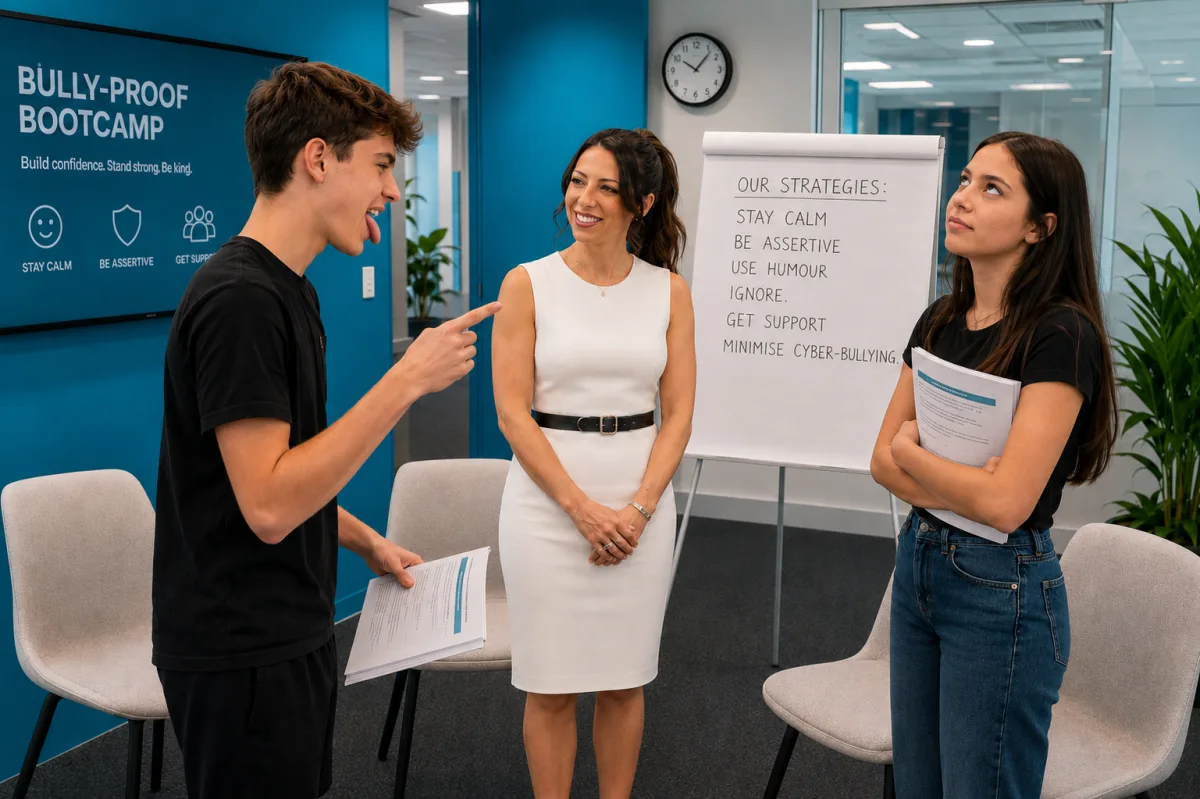
Program Suitability
Could This Bootcamp Be a Good Fit?
This Bootcamp May Suit a Young Person Who:
Wants practical strategies for difficult peer situations
Encounters teasing or challenging peer interactions
Wants to better understand different types of peer situations
Would like explicit discussion of response options
Wants opportunities to practise strategies
Has goals relevant to navigating peer challenges
Is willing to participate in a structured small-group workshop
Participation Involves Being Able To:
Fall within the advertised age range
Have goals relevant to navigating peer challenges
Be willing to participate in structured activities
Be able to participate safely with appropriate supports
Suitability can be discussed before enrolment.
Important
Participation in this workshop is not a substitute for safeguarding, school responses to bullying, or other appropriate intervention where a young person is currently at risk. Current or significant bullying concerns should be addressed directly with the relevant school, organisation or appropriate supports.
What We Explore
Building a Bigger Picture — and a Bigger Toolkit
Understanding Different Situations
Recognising the difference between everyday peer friction, targeted difficulties like teasing or exclusion, and bullying or safety concerns.
Responding Online
Group chats, social media, gaming and other digital spaces, including blocking, reporting and disengaging.
Knowing When to Seek Support
Recognising situations that are bigger than a young person should manage alone, and identifying trusted adults.
Where Responsibility Sits
Being bullied is never the target's fault. Responsibility for bullying behaviour sits with the person engaging in it — and adults, schools, organisations and platforms may also have a part to play in keeping someone safe and responding appropriately. The person being targeted should not be left to solve it alone.
A Neurodiversity-Affirming Approach
Building more response options for a young person -- not asking them to mask who they are.
Building a Bigger Toolkit
Teasing & Comments
Recognising teasing
Responding to verbal teasing
Managing embarrassing feedback
Considering when reactions may reinforce teasing
Considering when disengaging may be useful
Rumours, Gossip & Exclusion
Navigating rumours
Gossip
Social exclusion
Considering response options
Deciding when support is needed
Online Situations
Cyberbullying
Hostile messages
Group chats
Social media
Online gaming
Blocking and reporting
Disengaging
Seeking support
Help & Safety
Seeking help
Identifying trusted adults
Recognising when adult intervention is needed
Considering personal safety
Knowing when a situation is bigger than something a young person should manage alone
Learning by Doing
Understand
Make the situation and strategy explicit.
Watch
See examples or demonstrations.
Practise
Try different responses through scenarios, role-play or activities.
Reflect
Consider which options may be useful in different situations.
The workshop is interactive and includes structured practice, but participation can look different between people. Some may volunteer quickly, talk through scenarios, enjoy role-play or contribute frequently. Others may watch an example first, need more processing time, prefer structured prompts, or participate more gradually. The goal is meaningful engagement with the workshop material — practice should build options, not pressure or performance of one particular social style.
What This Bootcamp Can — and Can’t — Do
The bootcamp provides structured opportunities to understand difficult peer situations and practise possible responses. It cannot guarantee bullying will stop, control how other young people behave, replace school safeguarding procedures, replace ongoing psychological support where this is needed, or make a young person responsible for changing the behaviour of others.
Families dealing with current or significant bullying concerns should continue working directly with the relevant school, organisation and other appropriate supports.
Bootcamp or Full Program?
Looking for Something More Intensive — or More Ongoing?
This Bootcamp
2 intensive days, focused on recognising and responding to difficult peer situations, in a shorter workshop format.
Full PEERS® Programs
Structured learning over multiple weeks, a broader social-skills curriculum, repeated practice, and program-specific parent/social-coach components where applicable.
This bootcamp does not replace the complete PEERS® program. Families looking for longer-term structured learning can explore PEERS® for Teenagers or PEERS® for Young Adults depending on age and suitability. Explore PEERS® Programs
Want to Learn More About the PEERS® Bullyproof Bootcamp?
Tell us a little about the young person, their age and what has prompted your enquiry. Our team can answer questions about the workshop, suitability and current or planned availability.