
School Workshop | Neurodiversity & Self-Advocacy
What If Fitting In Didn’t Require Hiding Who You Are?
School can involve a lot of expectations about how students should communicate, participate, focus, organise themselves, manage sensory environments and respond socially. For neurodivergent teenagers, navigating those expectations can sometimes mean working extremely hard just to appear as though everything is fine.
This interactive workshop gives students opportunities to explore neurodiversity, understand individual strengths and support needs, develop language for self-advocacy and consider what genuine inclusion can look like within a school community.
The goal isn’t to teach students to become better at hiding their differences. It’s to build understanding of what helps people participate as themselves.
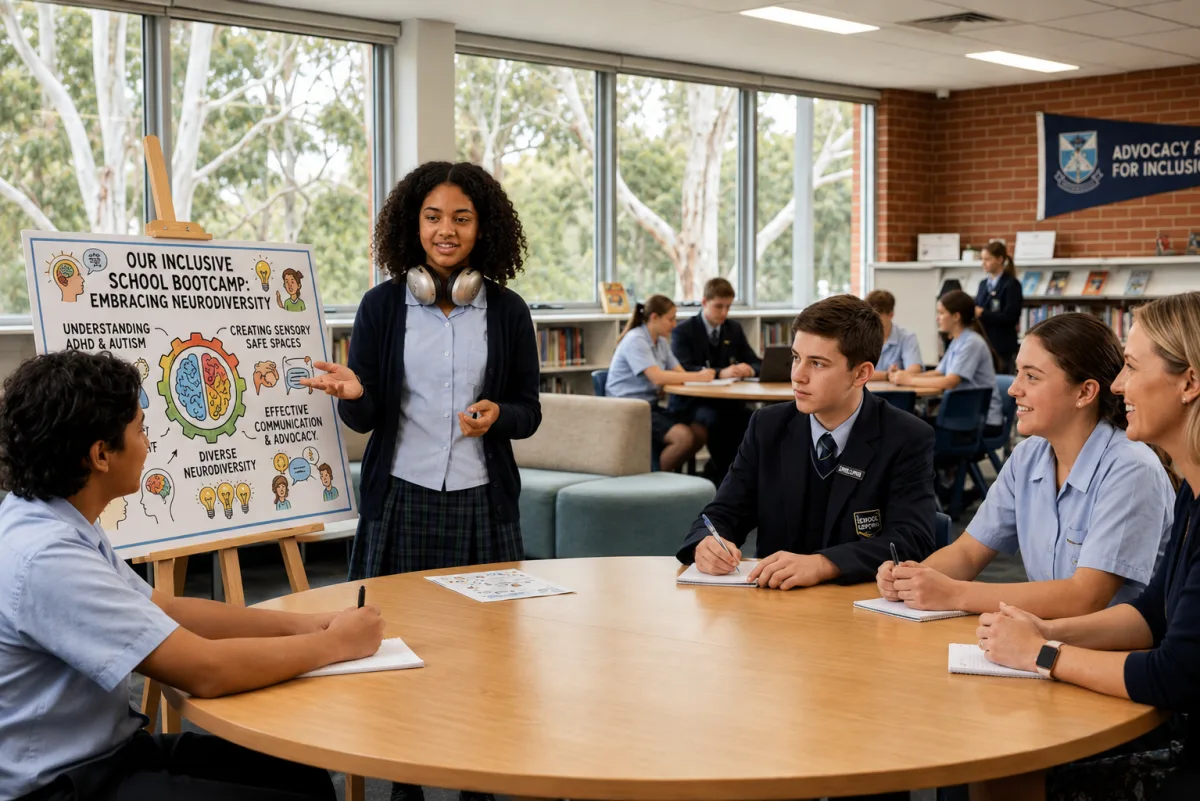
Understanding Neurodiversity
Different Brains Can Experience the Same Environment Differently
A student may appear to be getting through the school day while working hard to filter background noise, interpret instructions, manage unexpected change and hide discomfort — by the time adults notice stress, shutdown or withdrawal, that effort may have been going on for hours. Neurodiversity recognises that human brains naturally differ in how people process information, communicate, learn, focus, regulate and experience the world. The workshop can explore neurodivergence including autism and ADHD, and broader differences in communication, sensory processing, executive functioning, attention and emotional regulation.
Support needs do not erase strengths. Strengths do not erase support needs. The aim is to understand that people can experience the same classroom, conversation or expectation very differently — not to divide people into “normal” and “different.”
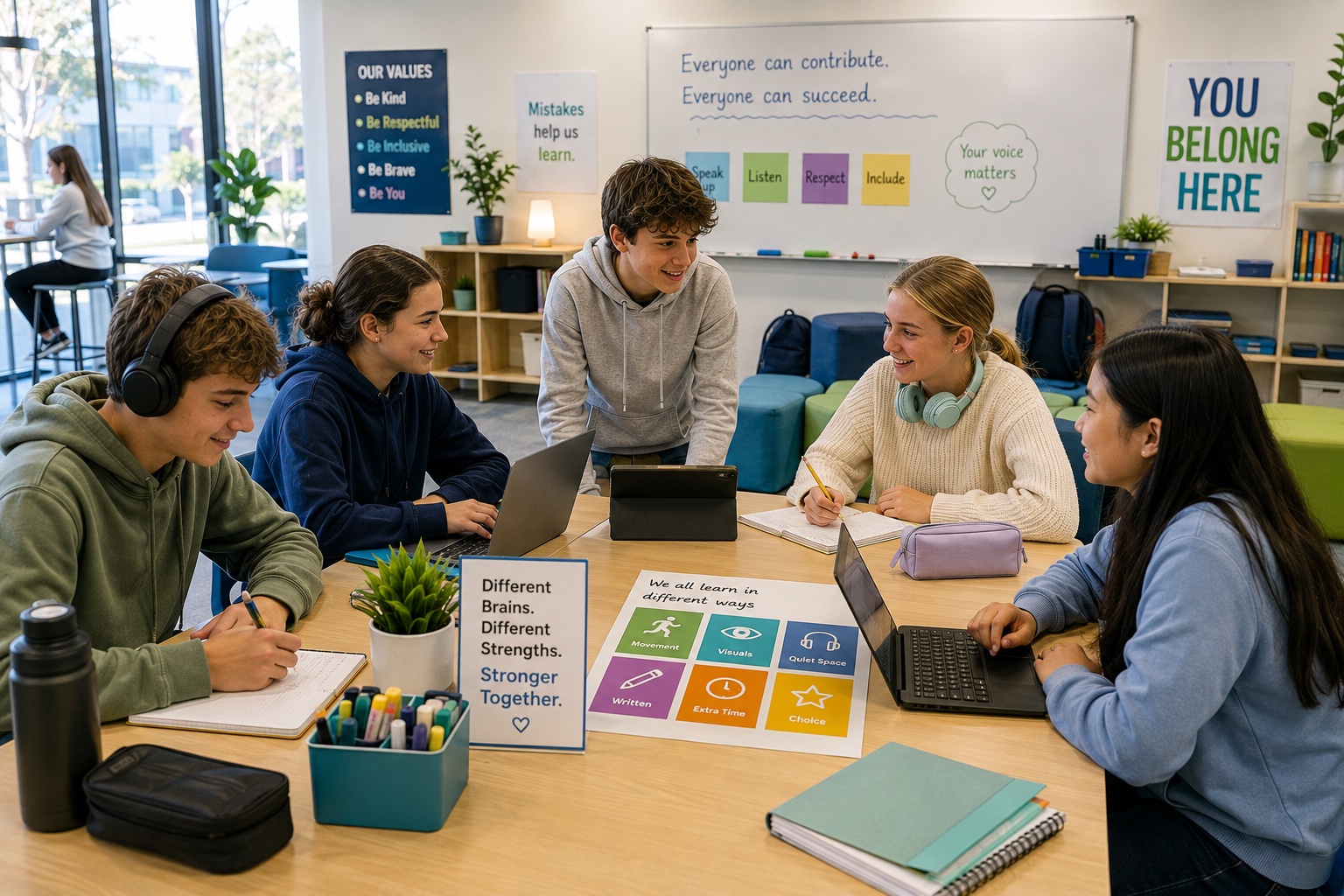
What We Explore
Understanding Yourself, Other People and the Environment Around You
Understanding Neurodiversity
Autism and ADHD
Neurodiversity
Stereotypes and misconceptions
Individual differences
Strengths
Support needs
Different communication styles
What Affects Participation
Sensory differences
Executive functioning
Emotional regulation
Environmental demands
Predictability
Communication demands
Situations that increase stress or overwhelm
Self-Advocacy & Support
Recognising what helps
Communicating needs
Asking for clarification
Requesting help
Discussing accommodations
Setting boundaries
Identifying trusted adults
Preparing for difficult conversations
Inclusion & Peer Support
Supporting neurodivergent peers
Respecting autonomy
Asking rather than assuming
Reasonable adjustments
Different ways of participating
Inclusive environments
Supporting someone without speaking for them
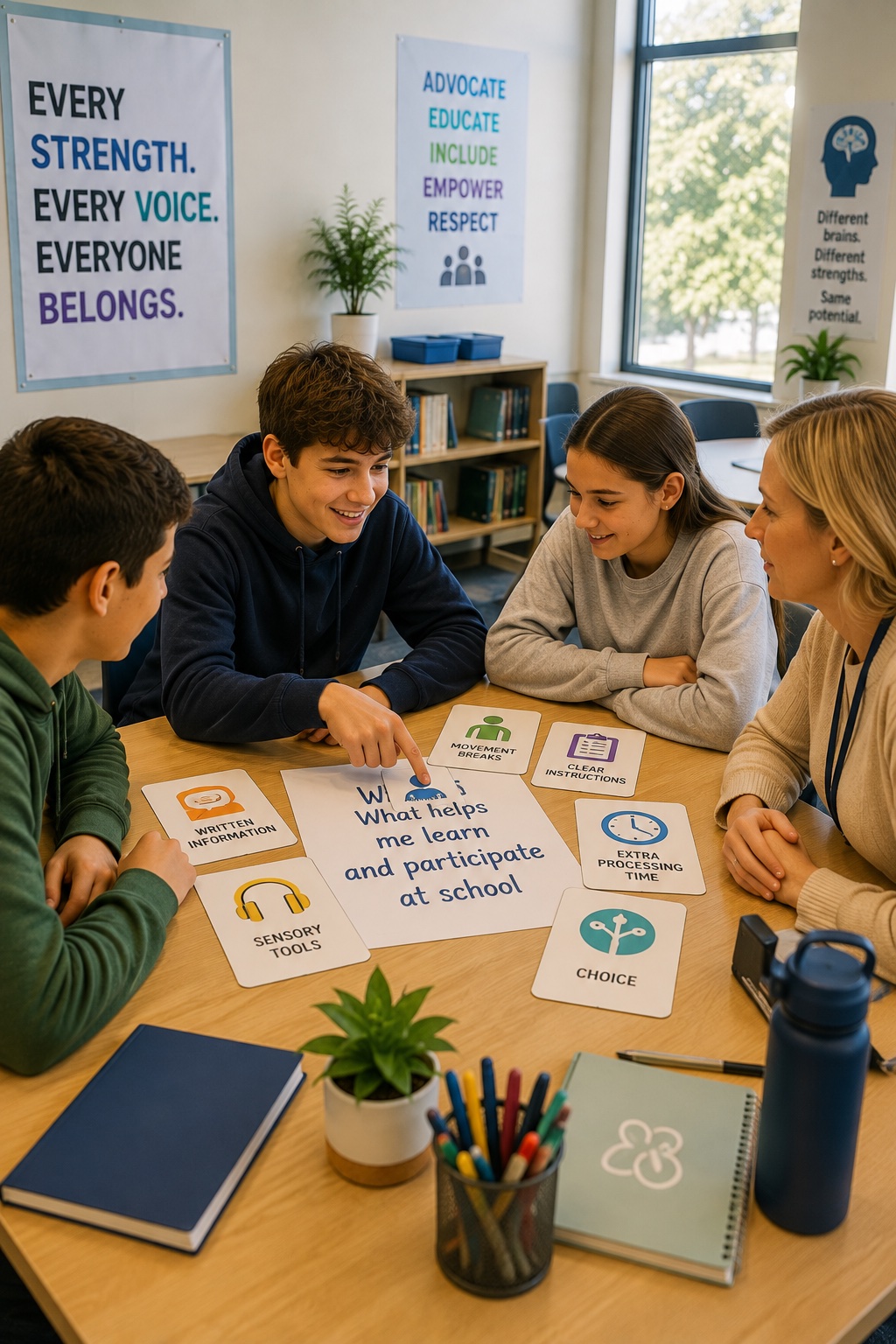
Inside the Workshop
Understanding, Language and Practical Strategies
Through discussion, scenarios and reflection, students explore masking — monitoring, suppressing or hiding parts of themselves to meet social or environmental expectations — and consider when adaptation feels like a deliberate choice and when it feels like pressure. Self-advocacy is explored as a practical skill: identifying what helps, recognising stress or overwhelm, and communicating needs and boundaries.
Self-advocacy is never framed as the student’s responsibility alone — adults and systems retain responsibility for accessibility, sensory load, communication demands and predictability. For mixed groups, the workshop also explores what it looks like to be a supportive peer: asking rather than assuming, listening, supporting without taking over, and respecting different ways of communicating and participating.
No student is ever required to disclose a diagnosis, personal difficulties or private experiences to take part.
Could This Be a Good Fit?
This Workshop Doesn’t Have to Be Only for Neurodivergent Students
A workshop for a neurodivergent wellbeing group can look different from one delivered to an entire year group — content is adapted to the audience:
Neurodivergent Student Group
May focus more strongly on self-understanding, self-advocacy, support needs, boundaries and accommodations.
Mixed Student Group
May explore neurodiversity, communication differences, inclusion, peer understanding and respectful support.
Peer Leadership / Wellbeing Group
May focus on inclusive environments, allyship, student voice and peer culture.
Broader Year Group
May provide accessible neurodiversity education, stereotype reduction, understanding differences and practical inclusion.
This workshop may be worth discussing if your school or organisation wants students to move beyond simply knowing terms such as autism, ADHD and neurodiversity — and begin exploring what understanding, self-advocacy and inclusion can look like in practice. It may suit:
Planning the Workshop
Start With What You Want Students to Understand
- 01
Talk With Us
Tell us about the student group and what has prompted the enquiry.
- 02
Identify the Focus
Discuss whether the priority is neurodiversity understanding, self-advocacy, inclusion, peer understanding or a combination.
- 03
Plan the Format
Agree on duration, audience, setting, accessibility and practical delivery.
- 04
Deliver
A Social Space psychologist facilitates the interactive workshop.
- 05
Continue the Conversation
Where appropriate, schools can discuss additional workshops, programs or consultation with The Social Space.
Before delivery, we discuss student age, audience, intended learning goals, group context, accessibility needs, relevant school initiatives and available time, so content can be selected and paced accordingly.
Want to Learn More About Advocating for Neurodivergent Teens?
Tell us about your students, school community and what you would like the workshop to explore. Our team can discuss the audience, focus, duration and delivery format that may best suit your setting.