
Social Clubs | Gaming Club
Gaming Gives Us Something to Connect Around
Fridays 4:00–5:30pm, Weekly
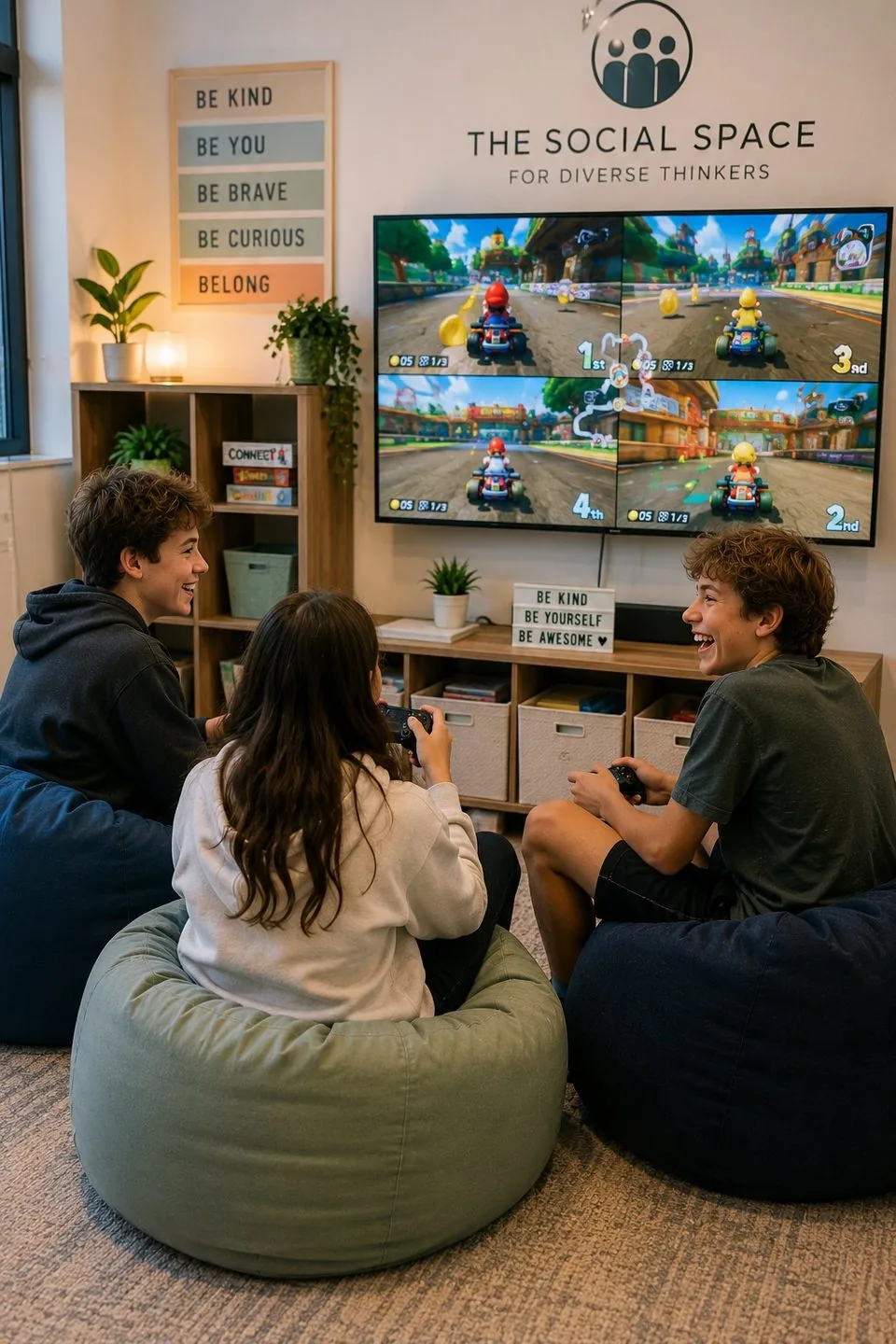
Walking into a group of unfamiliar people and being expected to “socialise” can feel like a lot. Walking into a room where everyone already shares an interest in gaming changes the starting point.
There is already something to talk about. Something to build. Something to solve. Something to play.
Gaming Club creates a smaller, structured environment where children and teenagers can spend time with others who share their interests — without making socialising itself the whole activity.
The emphasis is on the shared activity — playing, building, creating and spending time alongside people who enjoy some of the same things.
Register Your Interest Book a Free Consultation
Registering your interest does not confirm a place. Our team will contact you to arrange an initial consultation and discuss whether Gaming Club may be a suitable fit.
- Social Connection
- Shared Interest
- Small Groups
- Gaming & Technology
Shared Interest
The Game Gives Everyone Somewhere to Start
Gaming naturally creates shared reference points. Participants might:
- Collaborate on a build
- Solve a problem together
- Explain something they know
- Ask someone for help
- Celebrate something that worked
- Negotiate what happens next
- Laugh about something unexpected
- Spend time alongside others while focusing on the activity
These interactions do not need to be forced into a social-skills lesson. They emerge because participants are doing something together.
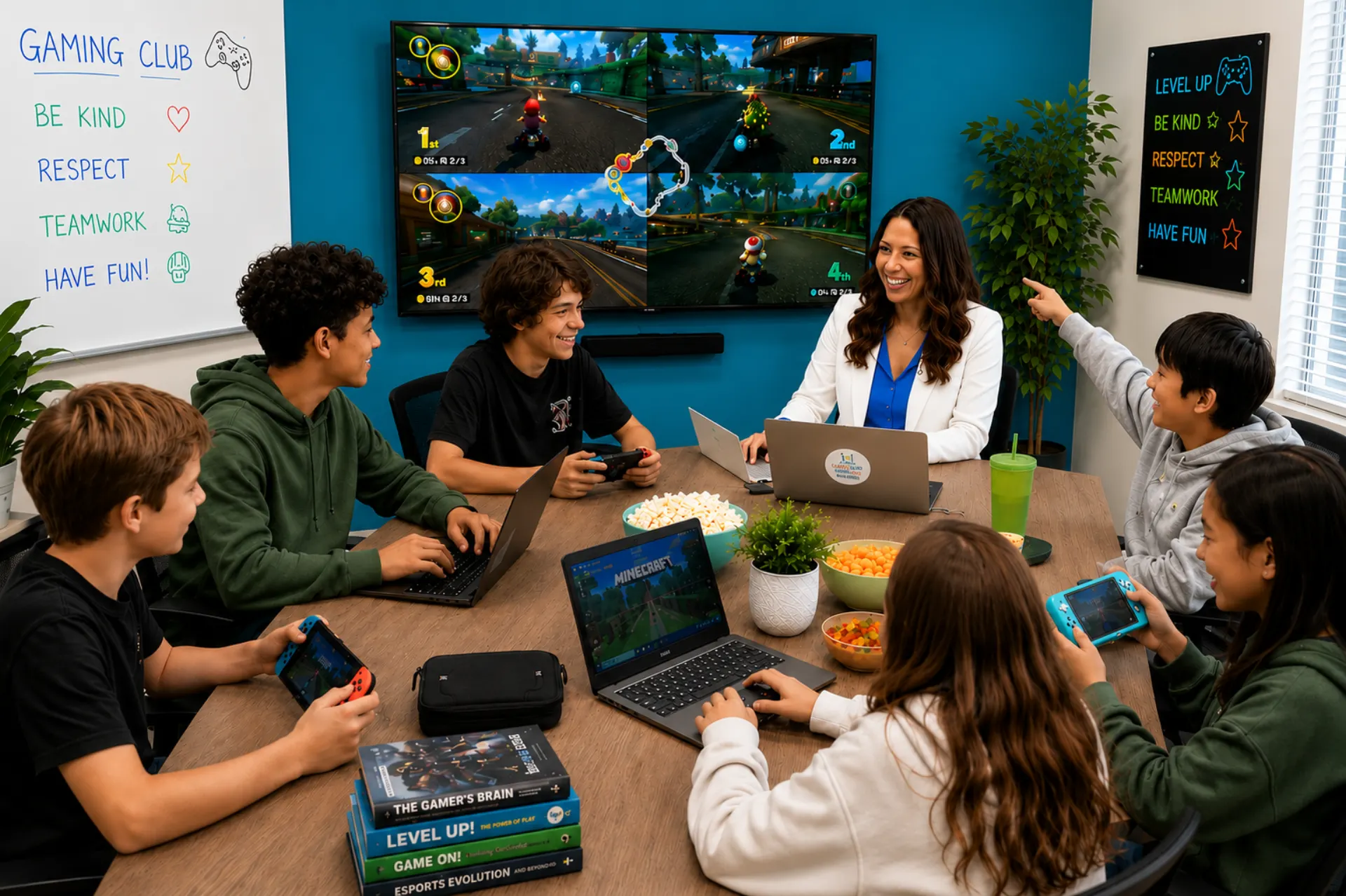
Inside Gaming Club
Play. Build. Create. Connect.
Sessions bring together Minecraft® building, coding, video editing and collaborative gaming — activities that can provide different ways of participating.
Some young people may want to collaborate closely. Others may initially prefer to work alongside the group and join interactions gradually. Both forms of participation can be valid.

Supported, Not Scripted
There’s Structure — Without Turning Every Interaction Into a Lesson
Mentors help create a predictable and supportive group environment. They can assist when participants need help navigating an interaction, understanding what is happening, solving a disagreement or finding a way into an activity.
But the purpose is not to stop the game every few minutes to analyse social behaviour. There needs to be room for play, interest, humour, creativity, quiet participation, collaboration — and simply enjoying being around people who like similar things.
Group Suitability
Could Gaming Club Feel Like a More Comfortable Way to Connect?
It may be worth exploring if your child or teenager:
Has a strong interest in gaming or technology
Would like opportunities to meet others with similar interests
Prefers smaller groups
Finds unstructured social environments difficult
Finds conversation easier when there is a shared activity
Enjoys collaborative or creative gaming
Prefers, or is looking for, a more predictable social environment
May prefer connecting alongside an activity rather than through conversation alone
A diagnosis isn’t required. Enjoying gaming should be the starting point, and a young person should not be placed in Gaming Club simply because an adult wants them to become more social.
Gaming not their thing? Tell us what they’re interested in.
Want to Learn More About Gaming Club?
Register your interest and our team will contact you to arrange an initial consultation — a chance to tell us about your child or teenager and their interests, hear how the group runs and talk through whether Gaming Club is likely to suit them. Registering does not confirm a place on its own.