
School Workshop | Neurodiversity & Self-Advocacy
What If Fitting In Didn’t Require Hiding Who You Are?
School involves expectations about how students communicate, participate, focus, organise themselves, manage sensory environments and respond socially. For some neurodivergent teenagers, navigating those expectations can involve significant effort — particularly when the environment assumes there is one “right” way to participate.
This interactive workshop gives students opportunities to explore neurodiversity, understand individual strengths and support needs, develop language for self-advocacy and consider what genuine inclusion can look like within a school community.
The goal isn’t to teach students to become better at hiding their differences. The workshop instead explores what can help people participate as themselves.
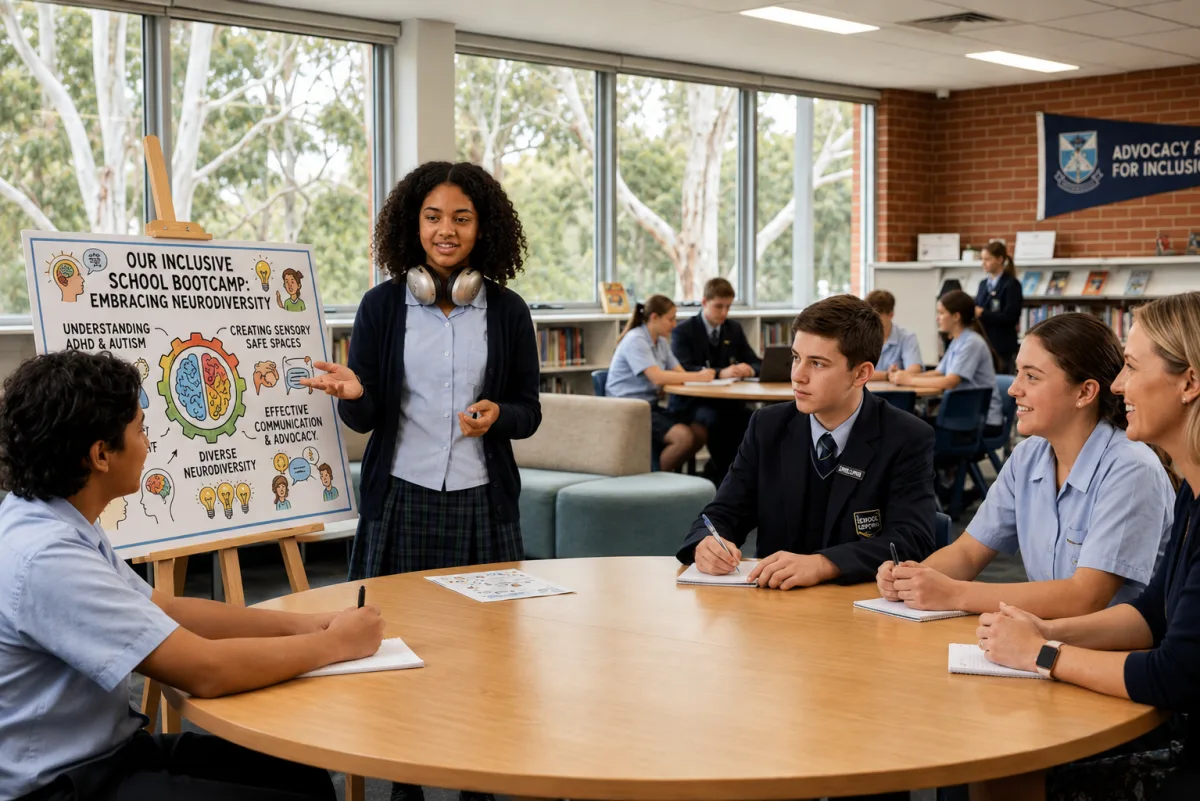
Understanding Neurodiversity
Different Brains Can Experience the Same Environment Differently
Two students can sit in the same classroom and experience it very differently. Noise, unexpected change, unclear instructions, social expectations, sensory demands, attention and executive functioning can all influence how someone experiences and participates in the school day.
The workshop introduces neurodiversity and explores differences associated with areas such as communication, sensory processing, attention, executive functioning and emotional regulation, including experiences associated with autism and ADHD.
Support needs do not erase strengths.
Strengths do not erase support needs.
The aim is not to divide students into “normal” and “different”. It is to understand that people can experience the same environment, conversation or expectation differently.
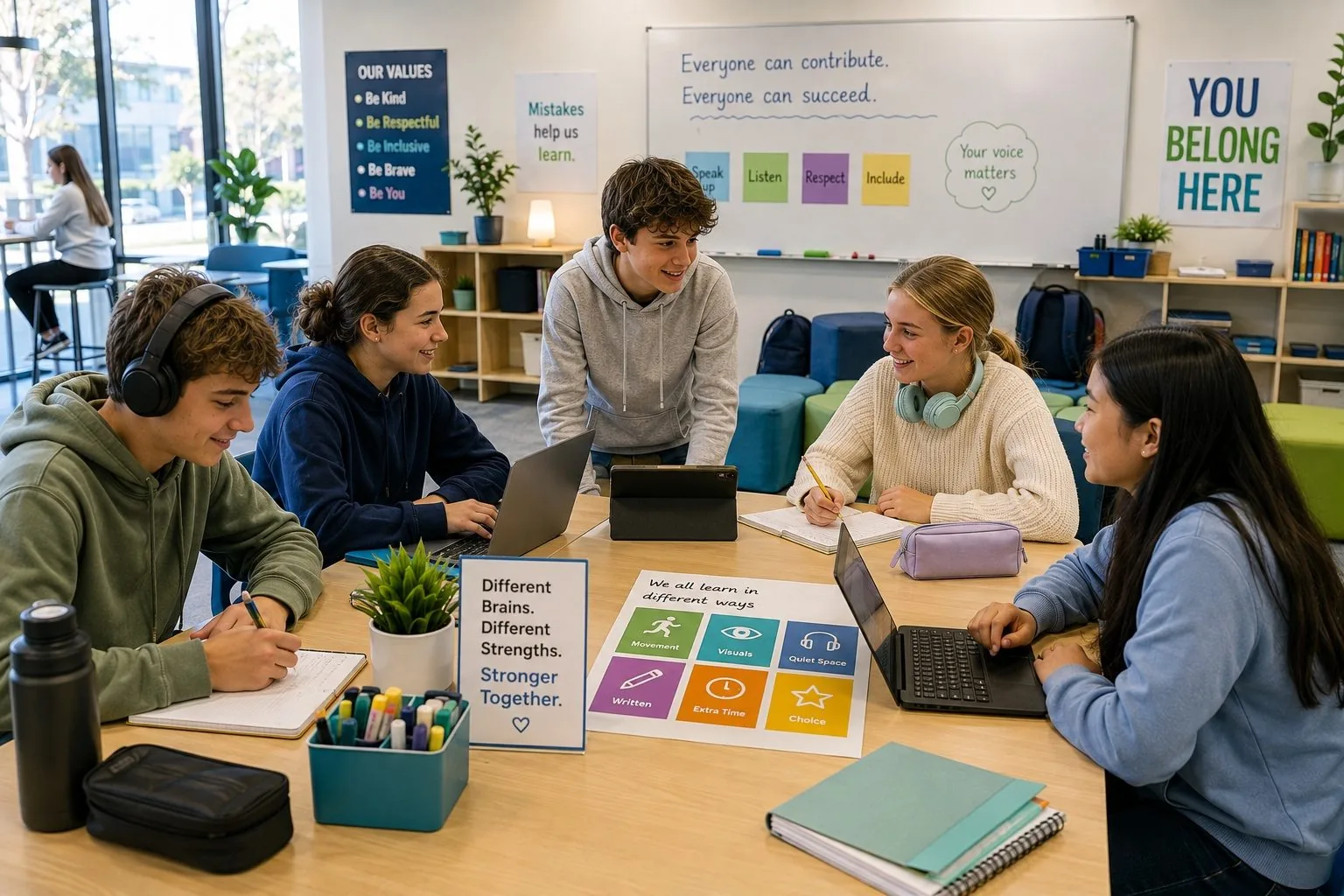
What We Explore
Understanding Yourself, Other People & the Environment Around You
Understanding Neurodiversity
Neurodiversity, autism and ADHD, stereotypes and misconceptions, individual differences, strengths, support needs and different ways of communicating and participating.
What Affects Participation
Sensory differences, executive functioning, emotional regulation, predictability, communication demands and environmental factors that can increase stress or make participation more difficult.
Self-Advocacy & Support
Recognising what helps, communicating needs, asking for clarification or support, discussing adjustments, setting boundaries and identifying trusted people.
Inclusion & Peer Support
Respecting autonomy, asking rather than assuming, supporting peers without taking over, reasonable adjustments and recognising different ways of participating.
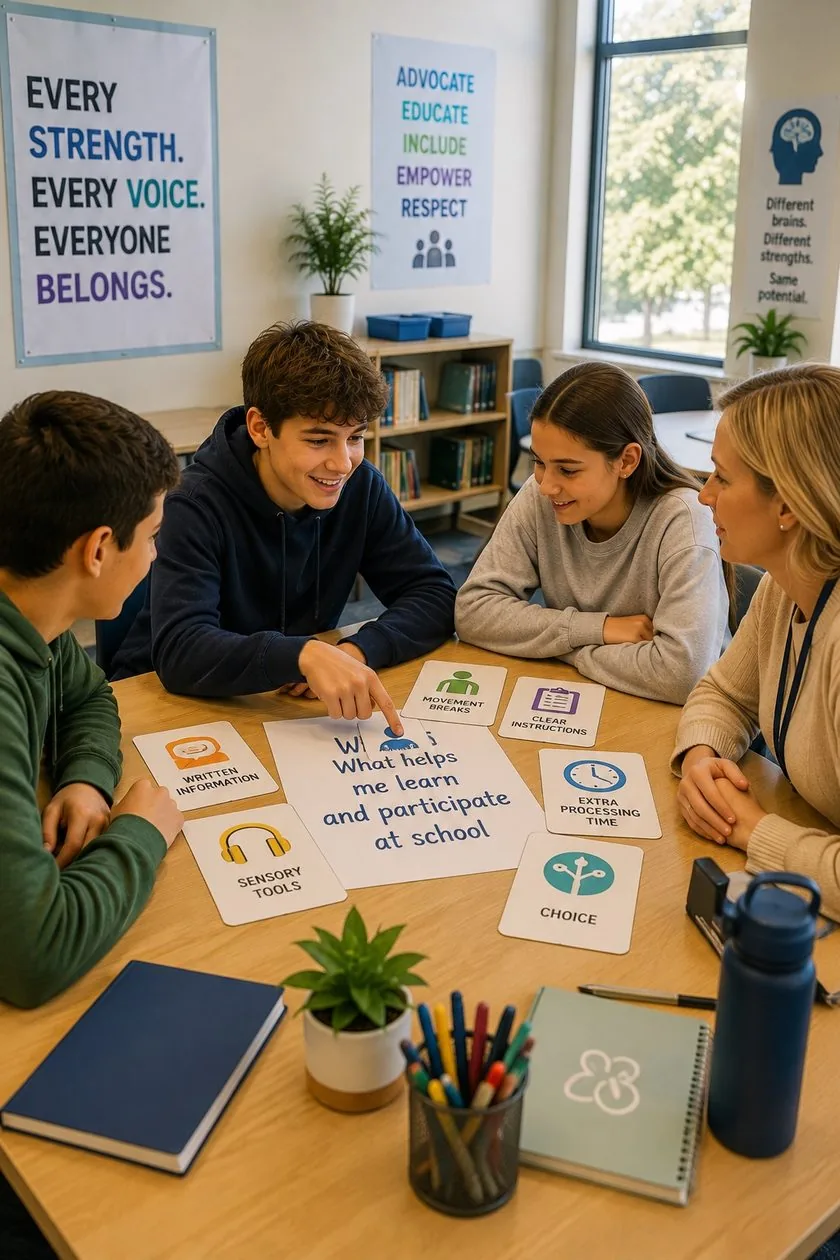
From Understanding to Self-Advocacy
Understanding What Helps — And Finding Ways to Communicate It
Through discussion, scenarios and reflection, students explore how different environments and expectations can affect participation.
The workshop can also explore masking — monitoring, suppressing or hiding parts of yourself in order to meet social or environmental expectations — and the difference between choosing to adapt in a situation and feeling pressure to hide who you are.
Self-advocacy is approached as a practical skill. Students can explore ways to recognise what helps, identify stress or overwhelm, communicate needs and boundaries, ask for clarification and discuss support.
No student is required to disclose a diagnosis, personal difficulties or private experiences in order to participate.
Inclusion in Practice
Inclusion Isn’t Just About Helping Students Adapt
Self-advocacy matters — but accessibility cannot sit entirely with the student. Adults, peers, school systems and environments also shape whether someone can participate comfortably and meaningfully.
The workshop encourages students to consider both sides: what a person may be able to communicate or do for themselves, and what people around them can do to make participation more accessible.
Sometimes a student needs a strategy.
Sometimes the environment needs to change.
Often, both matter.
For mixed groups, this can include exploring what respectful peer support looks like — asking rather than assuming, listening, supporting without taking over and respecting different ways of communicating and participating.
Suits Different School Groups
Different Groups Can Explore Neurodiversity in Different Ways
The workshop can be adapted according to who is participating and what the school wants students to understand.
Neurodivergent Student Group
May focus more strongly on self-understanding, self-advocacy, support needs, boundaries and adjustments.
Mixed Student Group
May explore neurodiversity, communication differences, inclusion, peer understanding and respectful support.
Peer Leadership / Wellbeing Group
May focus on inclusive environments, student voice, respectful allyship and peer culture.
Broader Year Group
May provide accessible neurodiversity education, challenge stereotypes and explore practical inclusion across the school community.
Tailored to Your School
Start With What You Want Students to Understand
The workshop can be adapted according to student age, the participating group, the school’s learning goals and accessibility needs.
A neurodivergent wellbeing group may need something different from a peer leadership group or whole year cohort. Before delivery, we discuss the audience and intended focus so the content can be selected and paced accordingly.
Advocating for Neurodivergent Teens
Want to Explore This Workshop for Your School?
Tell us about your students, school community and what you would like the workshop to explore. Our team can discuss the audience, focus and practical delivery arrangements that may best suit your setting.