
School Programs
Secret Agent Society®, Delivered in Your School
A nine-week social and emotional skills program for students aged 8 to 12, built around a spy-themed mission that children take seriously and enjoy.
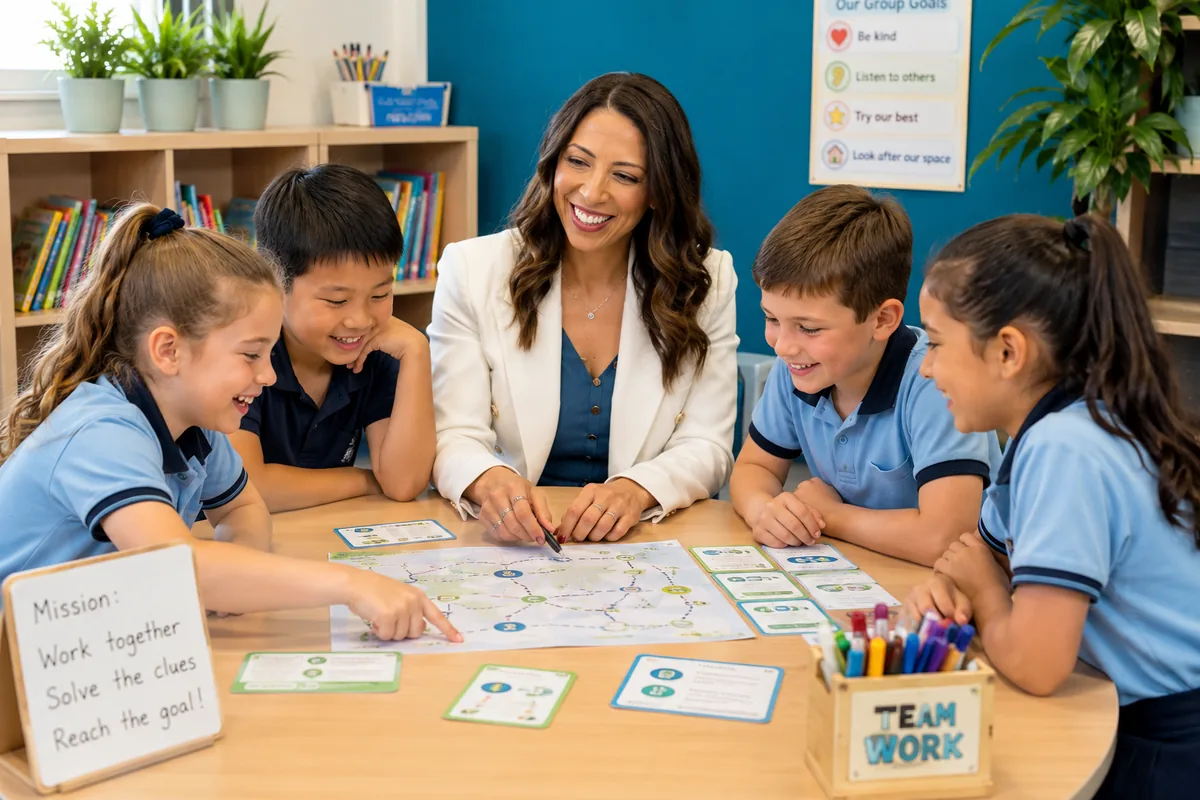
Secret Agent Society® teaches children to detect emotions — in themselves and in other people — and to do something useful with what they notice. The program uses a spy-themed training academy, missions, games and digital activities to make social and emotional concepts concrete and engaging for primary-school-aged children.
At a Glance
What This Looks Like in a School
- Ages
- 8 to 12 years
- Length
- 9 weekly sessions
- Session
- 90-minute child session, followed by 30 minutes of unstructured play
- Group Size
- Small group, agreed with the school
- Facilitation
- Psychologist-led; therapy-assistant support depending on group numbers
- Parent Component
- Yes — a parent meeting during the 30-minute play period
- Teacher Component
- Yes — teachers have a defined support role
- Cost
- Quoted per school; additional fees apply where parent sessions are scheduled outside school hours
Identifying a Group
Which Students This Suits
Secret Agent Society® provides explicit teaching and practice in emotional awareness, regulation, social problem-solving and friendship skills for primary-school-aged children. Schools most often identify students who are:
- Escalating quickly when frustrated, and taking a long time to settle
- Finding it difficult to recognise how other children may be feeling
- Finding group work, games with rules and playground negotiation difficult
- Anxious in social situations, or avoiding them
- Getting into repeated conflict without understanding how it started
- Wanting connection but finding social situations difficult to navigate
A diagnosis is not required to take part, and taking part is not an assessment. Where a school is unsure whether the program may be appropriate for the students it has in mind, we are glad to talk it through first.
Program Content
What Students Work On
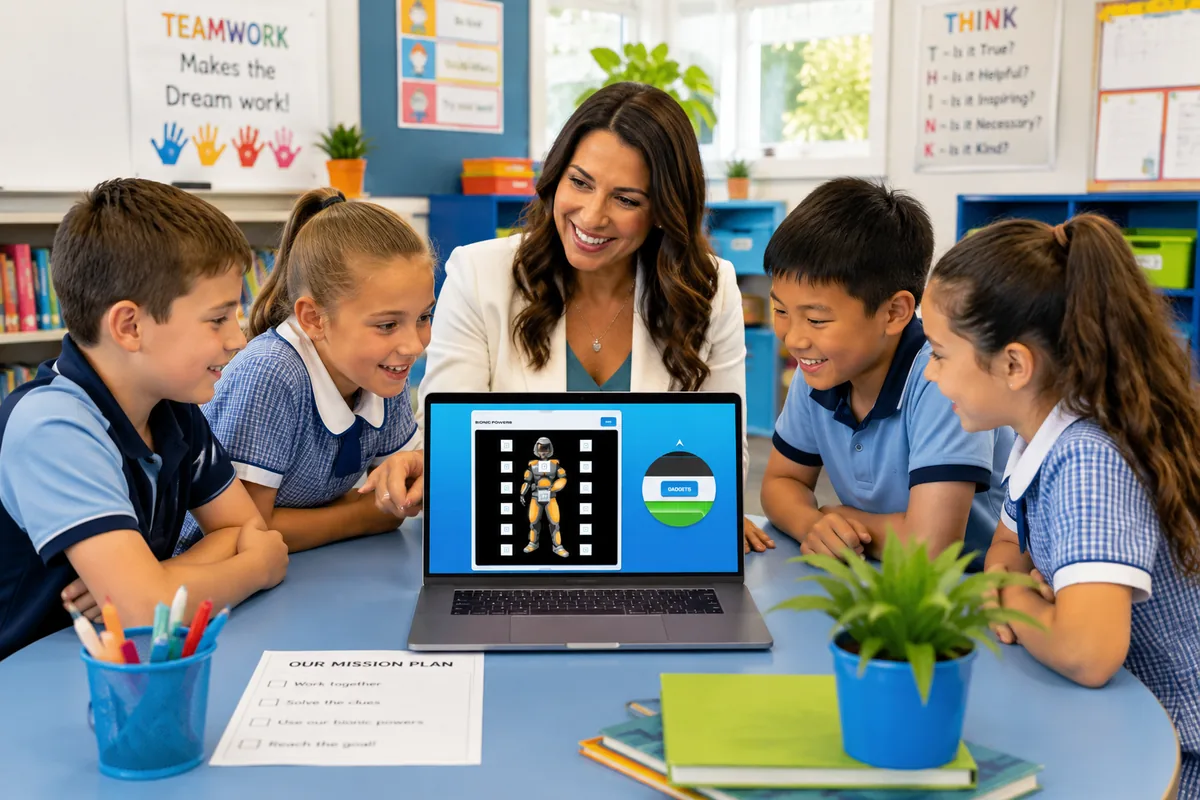
Children work through a sequence of missions, each teaching one skill, and collect points for using those skills between sessions — at school as well as at home. During sessions children also use the SAS portal to complete digital activities, and between sessions they play the SAS game and work through home missions.
Detecting Emotions
- Recognising emotions from face, body, voice and context
- Noticing your own physical warning signs
- Rating the intensity of a feeling
- Reading how another child is responding
Regulating Emotions
- Practical strategies for anxiety and anger
- Using regulation strategies before responding
- Choosing a strategy that fits the situation
- Recovering after things go wrong
Social Problem Solving
- Working out what is actually happening in a situation
- Generating more than one possible response
- Thinking through likely consequences
- Deciding what to do and trying it
Friendship & Playground Skills
- Starting and joining conversations and games
- Strategies for handling winning and losing during games
- Responding to teasing and bullying
- Coping with mistakes and change
Delivery
How It Runs in Your School
- 01
Identify the Group
Your wellbeing team identifies a proposed group of students. We meet with the school to discuss group composition and whether the program may be appropriate for the students identified. SAS has been studied with children with autism, ADHD and/or anxiety, including children with co-occurring diagnoses. When forming a school group, we consider individual needs, developmental stage and overall group fit.
- 02
Place It in the Timetable
Nine weekly sessions of 90 minutes, plus a 30-minute play period immediately afterwards. That play period is part of the program, not a break — it is where children practise with each other under observation.
- 03
Brief the Teachers
Classroom teachers are contacted and briefed at the start of the program, added to the SAS portal, and sent weekly tip sheets explaining the content covered. Teachers are encouraged to check in briefly with the child each day about whether they have used a program skill, and can award points toward the child's home reward. This helps teachers recognise the strategies being covered and support students to practise or use them during the school week.
- 04
Run the Parent Meeting
The parent meeting runs each week during the 30-minute play period. For families able to attend at that time, it occurs within the existing session block rather than requiring an additional scheduled school session. Where a family cannot attend then, parent sessions can be arranged outside school hours for an additional fee.
- 05
Run the Program
A psychologist facilitates each session, with a therapy assistant supporting delivery where group numbers require, using the full SAS resource set. Children access the SAS portal during sessions to complete digital activities, alongside board games, mission materials and group practice.
Working Together
What We Bring, What the School Provides
We Bring
- A psychologist as facilitator, with therapy-assistant support depending on group numbers
- The complete SAS resource set, including portal access for children, the SAS game, board games and mission materials
- Teacher briefing at the start of the program, staff portal access and weekly tip sheets
- Weekly parent meetings, run during the play period
- Liaison with your wellbeing team throughout the program
- Insurance, Working with Children Checks and required documentation
The School Provides
- A consistent room for the nine sessions
- A suitable space for the 30-minute play period afterwards
- A timetabled slot covering both parts of the session
- Identification of the student group, with your wellbeing team
- Classroom teachers willing to take up the briefing, daily check-in and points role
- Computers or tablets for the children's portal activities
Families & School Staff
Parent, Carer and Teacher Involvement
Secret Agent Society® includes a parent/carer meeting each week, normally held during the 30-minute play period that follows the child session. It runs concurrently with that play period rather than as a separate appointment. Parents also run a home reward system that responds to points the child earns through the week, including points awarded by their classroom teacher.
For families able to attend at that time, the meeting sits within the existing session block rather than needing a separate appointment. We also recognise that a weekday session is not always workable — The Social Space can arrange parent sessions online or outside school hours, so families still follow the program and can keep the home reward system running.
Teaching staff have a defined role in Secret Agent Society® itself. Teachers are briefed at the start of the program, added to the SAS portal, sent weekly tip sheets on the content covered, encouraged to check in briefly with the child each day about whether they have used a program skill, and able to award points toward the child's home reward. Teacher involvement provides an additional opportunity for the strategies and language covered in SAS to be recognised and supported during the school week. It sits alongside the parent component rather than replacing it.
The parent, carer and teacher arrangement is agreed with the school before the program is scheduled. We are glad to talk through what is realistic for your school community.
Research & Evidence
What the Research Tells Us
Secret Agent Society® was developed in Australia and has been evaluated in randomised controlled trials, including one conducted through hospital outpatient clinics with a mixed-diagnosis sample.
Emotion Regulation & Social Skills
The original randomised controlled trial (49 children, randomly assigned to the program or a wait-list) found that participants showed greater improvement in parent-reported social and emotion-management skills than the wait-list group. The study also reported that around three-quarters of participants moved into what that parent-report measure defines as its typically-developing range — the measure’s own terminology, not a description we would apply to a child.
A Mixed-Diagnosis Trial
A larger randomised controlled trial of 89 children aged 8–12 with ADHD, autism and/or anxiety, run through hospital outpatient clinics, found parent-reported improvement in emotion regulation and social skills for the 47 children receiving SAS compared with the 42 receiving treatment as usual.
Follow-Up Assessments
Both studies reported that the group-level changes observed after the program were also present at their respective follow-up assessments — five months in the original trial, six months in the later one. This describes the groups studied, not every individual participant.
Across Diagnoses
That trial included children with ADHD, autism and/or anxiety, including co-occurring presentations, and reported parent-rated improvement across those groups. It does not establish that the program is appropriate for any particular child or group.
Outcomes in both trials were largely parent-reported, and the programs studied were delivered in clinic and hospital outpatient settings. Delivery in a school is not identical to those settings. These findings describe groups of participants, not a guaranteed result for any individual student.
School Delivery & Pricing
Costs depend on the number of sessions, the size of the student group and practical requirements such as travel, so we quote per school rather than publishing a set fee. Tell us what you are considering and we will put together a quote.
Parent/carer participation is part of the program. Where those sessions need to be scheduled outside school hours, an additional fee applies and is set out in the quote — the standard delivery cost does not assume out-of-hours parent sessions.
School delivery is arranged directly with the school. Medicare and NDIS arrangements apply to individual clinic participation, not to a program commissioned by a school.
School Enquiries
Talk to Us About Running Secret Agent Society® at Your School
Tell us about the students you have in mind and what your school is hoping to support. We can talk through whether the program may be appropriate for the proposed group and what practical delivery could look like.
Enquire About DeliveryTalk to Our Team
Looking for Secret Agent Society® for your own child? See the Secret Agent Society® program page.