
School Programs
PEERS® for Preschoolers, Delivered in Your Setting
A structured, parent-assisted program building the foundations of play and friendship in young children, delivered in your setting by a psychologist.
Young children learn to play with other children mostly by doing it. For some, that route does not work on its own — they hover at the edge of play, join in a way that ends it, or find the back-and-forth of a game hard to sustain. PEERS® for Preschoolers breaks those foundations into explicit, teachable steps and has the child practise them with a parent beside them.
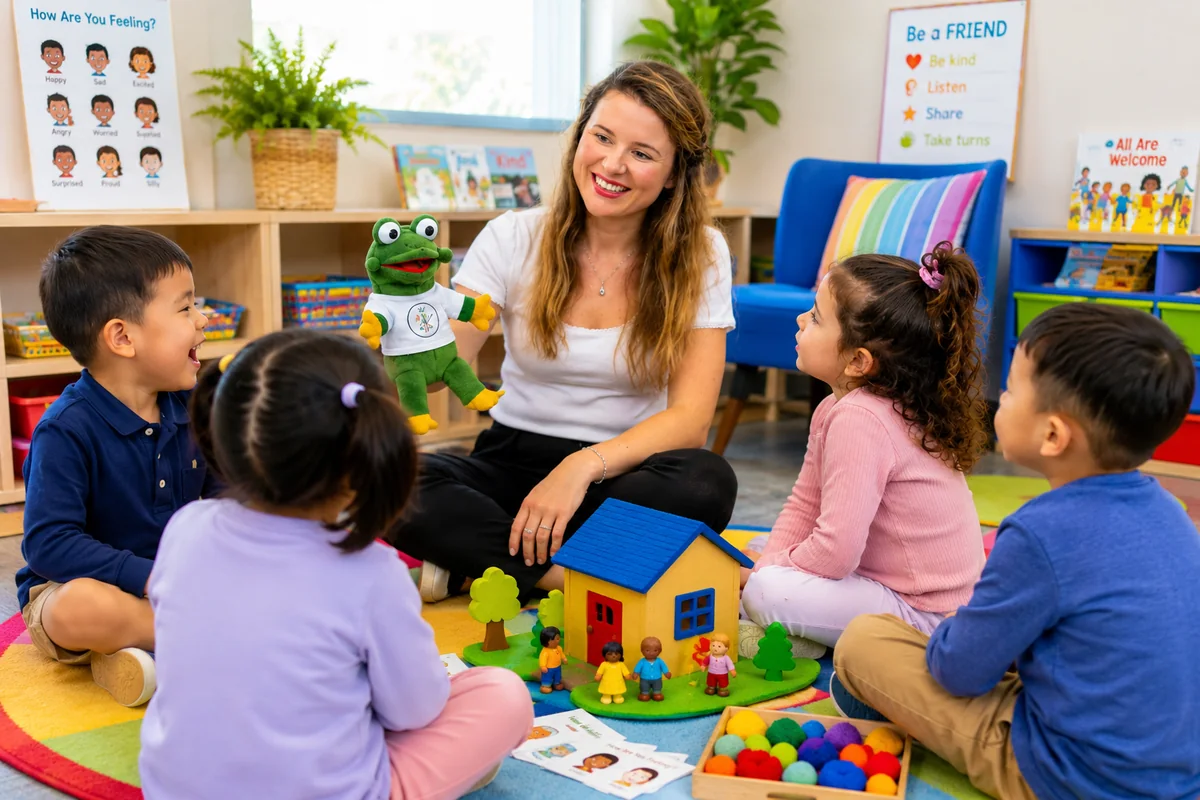
At a Glance
What This Looks Like in a School
- Ages
- 4 to 7 years
- Length
- 10 weekly sessions
- Session
- 90 minutes
- Format
- Small group
- Facilitation
- Psychologist-led; therapy-assistant support depending on group numbers
- Parent / Carer Component
- Yes
- Teacher / Educator Support
- Yes
- Delivery
- At the school or early-learning setting
- Cost
- Quoted per setting; additional fees apply where parent sessions are scheduled outside school hours
Identifying a Group
Which Students This Suits
This program suits young children who are interested in other children but are not yet getting what they want out of playing with them. Educators most often identify children who are:
- Playing alongside other children rather than with them
- Finding it hard to join a game already in progress
- Struggling with turn-taking, sharing and following a game's rules
- Ending play unintentionally through the way they join or lead it
- Becoming distressed when play does not go as expected
- Interested in other children but unsure how to begin
A diagnosis is not required to take part, and taking part is not an assessment. Where a school is unsure whether the program may be appropriate for the students it has in mind, we are glad to talk it through first.
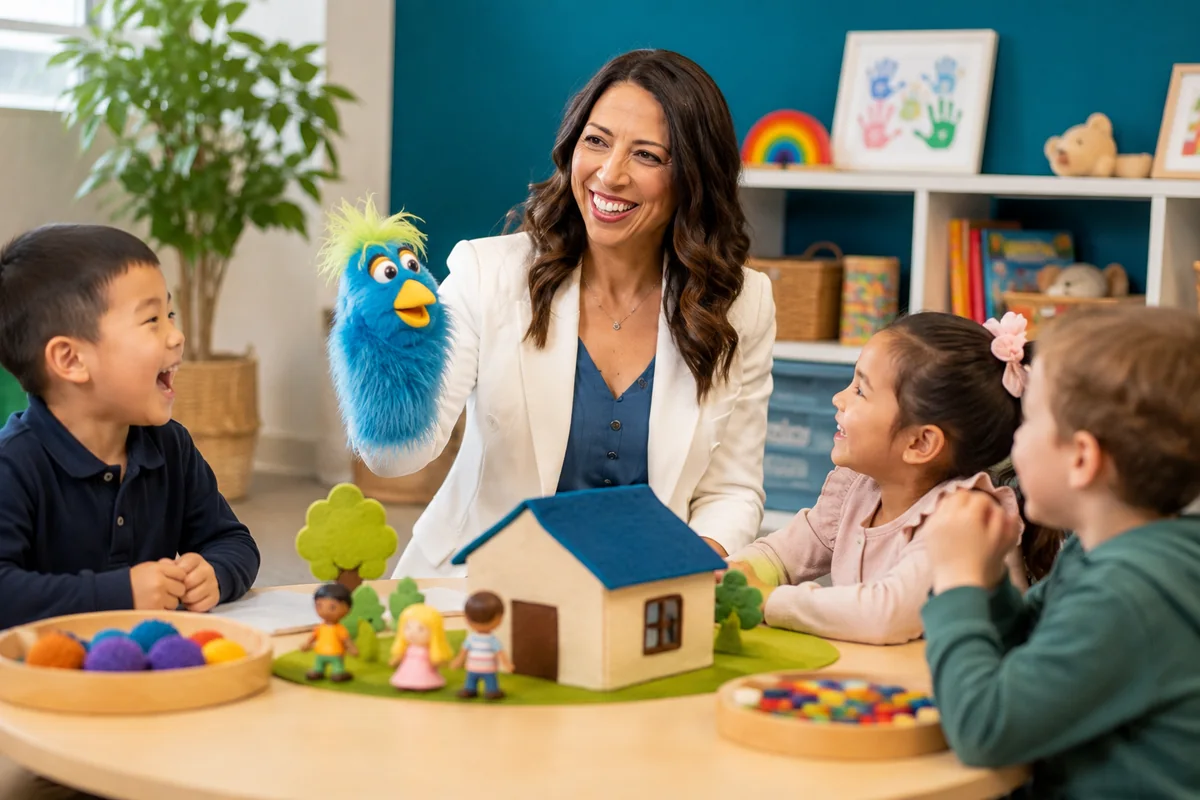
Program Content
What Students Work On
Each session teaches one part of playing well with another child, demonstrates it, and gives the children immediate structured practice with a parent supporting them.
Getting Into Play
- Watching a game before joining it
- Asking to join in ways that work
- Noticing when a moment is right
- Handling being told no
Staying In Play
- Taking turns and sharing materials
- Following someone else's idea for a game
- Keeping a game going back and forth
- Recovering when play goes wrong
Talking With Other Children
- Greeting other children
- Listening and responding in play
- Asking for help from an adult or a peer
- Using names and looking towards a play partner
Managing Feelings in Play
- Coping with losing and with changed rules
- Noticing frustration before it escalates
- Asking for a break
- Being a good sport
Delivery
How It Runs in Your School
- 01
Identify the Group
Educators and the setting's leadership identify children who would benefit. We meet with you to confirm the group works — children at a similar developmental stage do better together than children matched by age alone.
- 02
Confirm Parent/Carer Arrangements
Parent/carer participation forms part of the program. We work with the setting to plan how this will fit with the program timetable — a late-afternoon or start-of-day slot often works better than the middle of the day. Where parent sessions need to be scheduled outside school hours, an additional fee applies.
- 03
Set Up the Room
Ten weekly 90-minute sessions in a consistent space with room to play on the floor, away from the main flow of the setting.
- 04
Run the Program
A psychologist facilitates the program, with a therapy assistant supporting delivery where group numbers require. Children learn a strategy, then practise it immediately in supported play while their parent coaches alongside them.
- 05
Support Carry-Over
We can brief educators on what each week covers, so the same language is used in the playground and the room between sessions.
Working Together
What We Bring, What the School Provides
We Bring
- A psychologist as facilitator, with therapy-assistant support depending on group numbers
- All program materials, play resources and parent handouts
- Psychologist-led delivery of PEERS® for Preschoolers
- Coaching for parents during and between sessions
- Liaison with your educators and leadership team
- Insurance, Working with Children Checks and required documentation
The School Provides
- A consistent room with floor space for supported play
- A timetabled slot that parents can realistically attend
- Identification of the children, with your educators
- Communication with families about the parent commitment
- A staff contact for the duration of the program
Families & School Staff
Parent & Carer Involvement
Parent and carer participation is an important part of the standard PEERS® for Preschoolers program. Parents and carers learn the strategies alongside their child and are supported to practise them in everyday situations outside the group.
We also recognise that attending sessions during the school or early-learning day is not always practical for families. Where needed, The Social Space can arrange separate online parent/carer sessions, allowing families to learn the same concepts and support practice outside the school setting.
PEERS® for Preschoolers can also be delivered in a school or early-learning setting without a parent/carer component where this is the most workable option for the community. This represents a modification to the standard program model. Because the published research on PEERS® for Preschoolers has evaluated the program with parent involvement, the same research findings should not automatically be assumed to apply to delivery without that component.
Where appropriate, we can also work with teaching and wellbeing staff so they understand the concepts being explored in the group and can recognise opportunities to support their use during the school day.
We discuss parent/carer involvement, staff involvement and the practical delivery model with the school or early-learning service before the program is scheduled.
Research & Evidence
What the Research Tells Us
PEERS® for Preschoolers is the youngest program in the UCLA-developed PEERS® suite and has a correspondingly smaller evidence base than the adolescent program. The studies below are mostly small and several are uncontrolled, which limits what can be concluded from them.
Social Skills & Peer Interaction
An initial pilot study reported improvements in child social skills alongside caregiver style and family-functioning measures following participation.
Parent Social Coaching
Parent involvement is central to the program. In follow-up interviews, most parents described continuing to use the social-coaching strategies taught in the program, in some cases years afterwards.
Longer-Term Maintenance
Parents followed up 1–5 years after the program reported that some social-related treatment gains were maintained, although not every change observed post-program persisted over time.
Telehealth Feasibility
A pilot study of a remote, parent-mediated telehealth version of the program reported it was feasible and acceptable to families, with increases in parents' confidence in social coaching.
These studies were conducted with families attending clinics, and largely with autistic children. A group formed within an early learning setting may differ from those samples.
School Delivery & Pricing
Costs depend on the number of sessions, the size of the student group and practical requirements such as travel, so we quote per school rather than publishing a set fee. Tell us what you are considering and we will put together a quote.
Where separate online parent/carer sessions or out-of-hours sessions are part of the agreed model, these are set out in the school quote alongside the rest of the program.
School delivery is arranged directly with the school. Medicare and NDIS arrangements apply to individual clinic participation, not to a program commissioned by a school.
School Enquiries
Talk to Us About Running PEERS® for Preschoolers at Your School
Tell us about the students you have in mind and what your school is hoping to support. We can talk through whether the program may be appropriate for the proposed group and what practical delivery could look like.
Enquire About DeliveryTalk to Our Team
Looking for PEERS® for Preschoolers for your own child? See the PEERS® for Preschoolers program page.