PEERS FOR PRE-SCHOOLERS
The PEERS® Program for Pre-Schoolers is UCLA’s highly acclaimed social skills training, adapted for children aged 4–6. It is one of the only evidence-based interventions for young children with autism spectrum disorder (ASD) and has also been shown to benefit children with ADHD, anxiety, depression, and other social challenges.
Using fun, interactive methods—puppet shows, role-play demonstrations, and group activities—children learn practical, real-world skills and practice them at home each week. The program builds confidence and lays the social foundations children need to thrive at school and in daily life.
Skills Covered
Communication Skills
- Asking and using names
- Greeting friends
- Asking friends to play
- Asking for and offering help
Play & Cooperation Skills
- Sharing and taking turns
- Joining ongoing games
- Transitioning smoothly between activities
- Being a good sport
Emotional Regulation
- Listening and following directions
- Keeping calm during play
- Using appropriate volume control
- Respecting personal space and boundaries
Participation Requirements
- Children aged 4–6 years
- Diagnosis of Autism Spectrum Disorder or other social challenges
- Consistently speaking in phrases or sentences of four+ words
- No significant behavioural concerns (e.g., aggression)
- Funding options: NDIS packages and Medicare rebates may apply
Why It Matters
Early childhood is a crucial time to support social development and emotion regulation. For children with ASD, ADHD, or anxiety, making friends and joining play can be extra challenging. This program gives neurodiverse children the tools to communicate, cooperate, manage big feelings, and build confidence, setting the foundation for long-term success at school and in life.
Proven Results
PEERS® for pre-schoolers has been studied internationally for over a decade, with research consistently showing:
- Improvements in social communication and friendship skills
- Better emotional regulation during peer interactions
- Increased parent confidence in supporting children’s social development.
PEERS® for Preschoolers Research
Participation Requirements
- Children aged 4–6 years
- Diagnosis of Autism Spectrum Disorder or other social challenges
- Consistently speaking in phrases or sentences of four+ words
- No significant behavioural concerns (e.g., aggression)
- Funding options: NDIS packages and Medicare rebates may apply
Why It Matters
Early childhood is a crucial time to support social development and emotion regulation. For children with ASD, ADHD, or anxiety, making friends and joining play can be extra challenging. This program gives neurodiverse children the tools to communicate, cooperate, manage big feelings, and build confidence, setting the foundation for long-term success at school and in life.
Proven Results
PEERS® for pre-schoolers has been studied internationally for over a decade, with research consistently showing:
- Improvements in social communication and friendship skills
- Better emotional regulation during peer interactions
- Increased parent confidence in supporting children’s social development.
PEERS® for Preschoolers Research
Program Structure
Duration
12 weeks
Format
Weekly 90-minute sessions
Activities
Puppet shows, role-plays, group games, and social practice
Parent Involvement
Parents attend parallel coaching sessions to learn strategies that support skill practice and reinforcement at home.
How Can I Apply to Participate?
We’d love to welcome pre-schoolers into the program.
Book an initial consultation to confirm whether PEERS® for Pre Schoolers is the right fit for you or the schooler in your care.
The PEERS® Social Skills Program for Pre-Schoolers
PEERS® Social Skills Program for Preschoolers.
Building Early Social Confidence Through Guided Play
PEERS® for Preschoolers is an evidence-informed social skills program developed at the University of California, Los Angeles (UCLA), supporting young children to build the foundational skills needed for positive social interaction and connection.
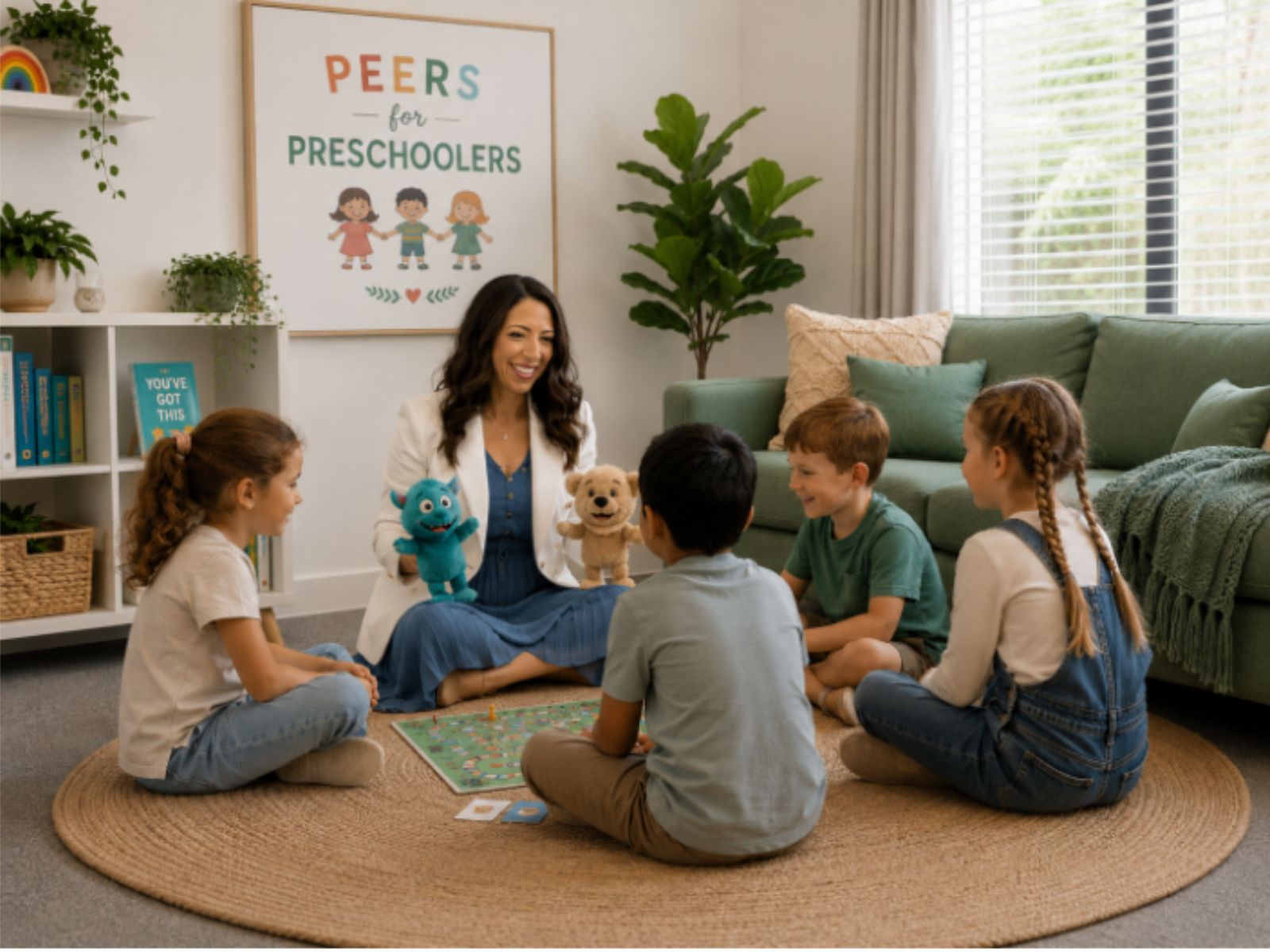
Through structured, play-based learning, children are guided to develop and practise social communication skills using engaging activities, role-plays, and parent-supported strategies. Learning extends beyond sessions, supporting children to apply these skills across home, early learning, and everyday social environments.
Why This Program Matters
Early social development plays an important role in how children connect with others, engage in play, and participate in group settings. When social interaction feels challenging, it can impact a child’s confidence and willingness to join in.
PEERS® for Preschoolers provides a structured and supportive environment where children can safely learn and practise social and emotional skills - helping them build confidence, connect with peers, and feel more comfortable in social situations.
Program Details
-
Age Range 4–6 years
-
Eligibility Suitable for children experiencing social challenges, including Autism, ADHD and anxiety
-
Funding Options NDIS (Self and Plan-Managed), Medicare and private options available
-
Schedule Thursdays 9:00am - 10:30am (Terms 1 and 3)
-
get started Contact our team to learn more, discuss suitability, and secure a place in the next group
Is This the Right Fit?
This program may be suitable if your child:
- Finds it difficult to initiate or join play with other children
- Has difficulty with sharing, turn-taking, or cooperative play
- Becomes frustrated or overwhelmed in social situations
- Has difficulty following social rules or group expectations
- Would benefit from building confidence when interacting with peers
- Is preparing for school or adjusting to more structured settings
Skills Developed
Participants are introduced to foundational social skills across key areas:
Play and Social Interaction
- Asking friends to play and joining group activities
- Sharing, turn-taking, and cooperative play
- Managing winning and losing in a positive way
Communication Skills
- Greeting others and using names
- Asking for and offering help
- Using appropriate voice volume and body boundaries
Emotional Regulation
- Staying calm during play and group activitiesc
- Managing frustration and transitions
- Following directions and group expectations
Friendship Foundations
- Building positive peer interactions
- Staying engaged in shared activities
- Developing confidence in social settings
What Makes This Program Different
- Evidence-informed program developed at UCLA
- Play-based, developmentally appropriate approach
- Use of puppets, role-play, and guided practice
- Parent involvement to support consistency across environments
- Neuroaffirming approach that values individual differences
- Opportunities to apply skills across home and early learning settings
What You Can Expect
The program focuses on supporting children to:
- Build confidence in social interaction and play
- Develop communication and early conversation skills
- Strengthen emotional awareness and regulation
- Engage more comfortably in group settings
- Build confidence in peer relationships
Program Structure
-
DURATION 12-week program
-
FORMAT Small group sessions (90 minutes) with parent involvement
-
APPROACH Structured, play-based incorporating role-play and guided practice
-
PARENT COMPONENT Parent coaching sessions and supported parent-child practice
-
PRACTICE BETWEEN SESSIONS Weekly home-based activities to reinforce skills in everyday settings
Research and Evidence
This program draws on a well-established evidence base in early social development. PEERS® for Preschoolers is informed by research exploring social skills development, emotional understanding, and parent-supported interventions in early childhood. Research in this area has found:
- Improvements in children’s social communication and peer engagement
- Increased caregiver confidence in supporting social development
- Positive changes in family functioning and parent-child interaction
- Maintenance of social skills over time following program participation
Studies conducted across clinical and community settings have examined the use of structured, parent-assisted approaches in supporting young children with social differences. Outcomes vary depending on individual factors, and participation does not guarantee specific results.
Parent Involvement
Parent involvement is a key part of the program. Parents attend dedicated coaching sessions and are supported to practise strategies with their child both during sessions and at home, helping to reinforce learning and support consistency across environments. No prior knowledge is required - our team will guide you through each step.
Delivery Options
This program is available through flexible delivery options:
-
FACE-TO-FACE (Mascot Clinic) Structured, engaging sessions in a supportive in-person environment
-
SCHOOL OR EARLY LEARNING Delivered in collaboration with educators to support application of skills in real-world settings
Finding the Right Support
We understand that supporting your child’s early social development can feel important. Our team is here to guide you through the process, helping you understand your child’s needs and determine whether PEERS® for Preschoolers is the right fit, or recommend the most appropriate support option.
Ready to find the right support for your child's social development?
Contact our team to learn more or secure a place in the next PEERS® for Preschoolers group.