
Emotional Skills Program | Ages 4–6
Helping Young Children Make Sense of Big Feelings
Fun with Feelings — a parent-supported program for ages 4–6
For young children, big feelings can arrive quickly and feel impossible to explain. Worry, frustration or sadness may show up as tears, meltdowns, clinginess or difficulty settling — long before a child has the words to say what’s wrong.
Fun with Feelings is a structured, parent-mediated program that helps children aged 4–6 begin to recognise, name and manage their emotions, particularly anxiety, through play-based learning, visual supports and guided practice.
Parents are involved throughout, learning practical strategies to support their child’s emotional development at home — so the skills learned in session carry into everyday life.
The goal is not to stop a young child from feeling big emotions. It is to help them begin to understand and express what they’re feeling, and to give parents practical ways to support them.
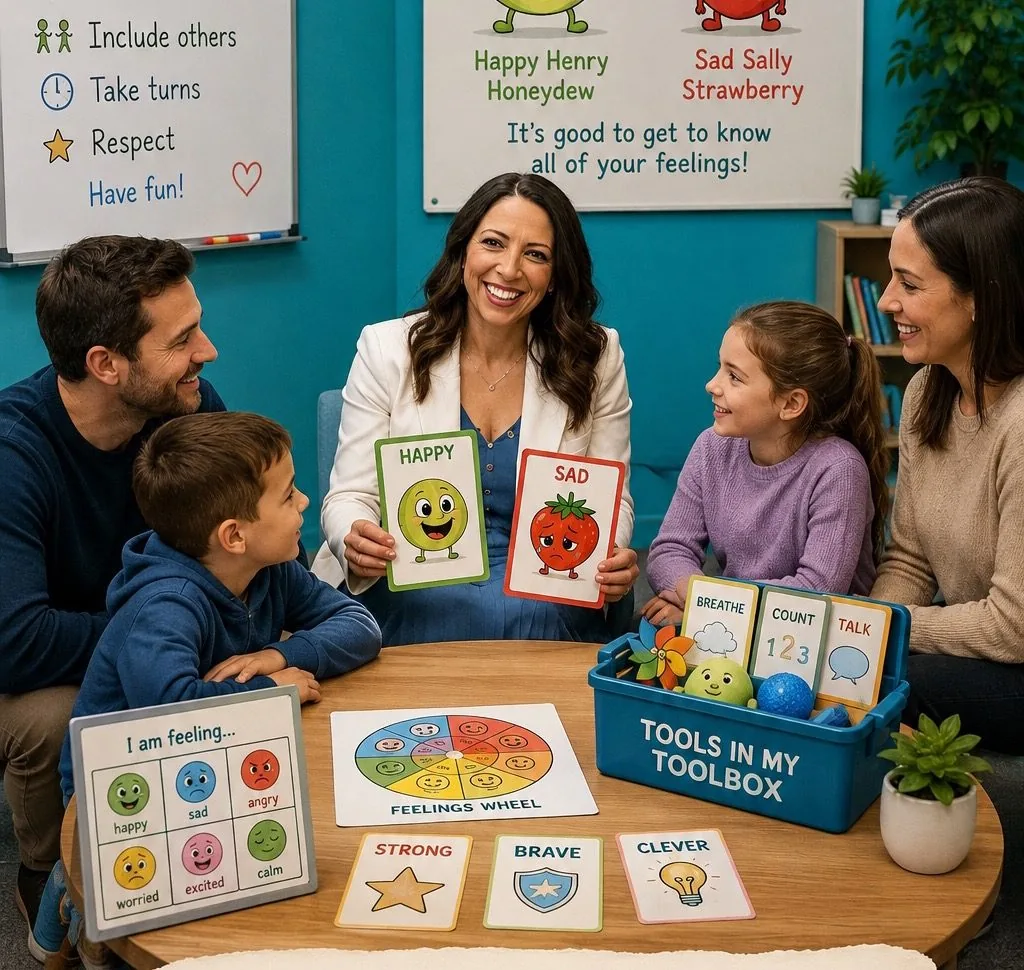
- Parent-Mediated
- Evidence-Informed
- Play-Based Learning
- Early Intervention
Recognising the Signs
When a Young Child Can’t Yet Say What They’re Feeling
A young child experiencing anxiety or big emotions may not have the words to explain what’s happening for them. It might show up as tears over small changes, difficulty separating, avoiding new situations, meltdowns that seem to come from nowhere, or needing a lot of reassurance to feel settled.
These are not signs that something is wrong with your child — they’re signs that emotional understanding is still developing. Fun with Feelings gives children and parents a shared, structured way to build that understanding together.
About the Program
Building Emotional Understanding From the Ground Up
Fun with Feelings is a structured, evidence-informed program developed by clinical psychologists Tony Attwood and Michelle Garnett to support young children in understanding and managing emotions, particularly anxiety. It combines cognitive and behavioural strategies with engaging, play-based learning.
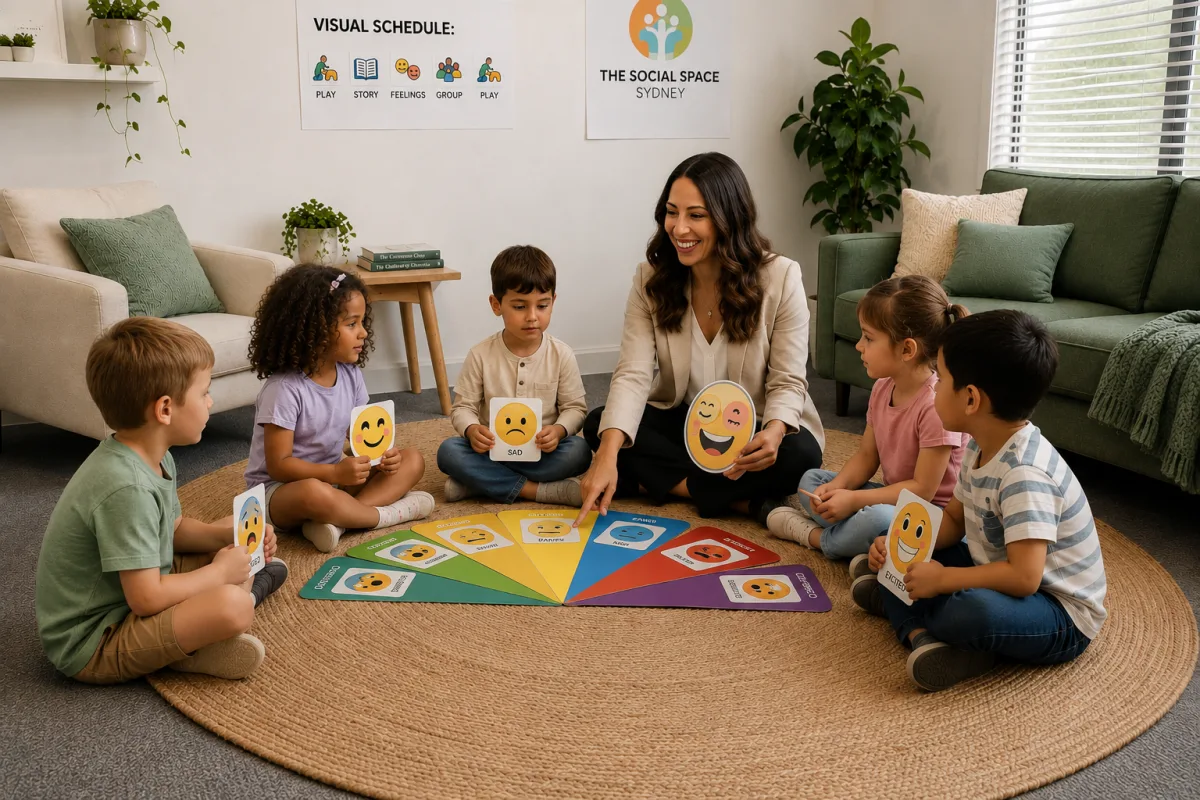
Through structured activities, visual supports and guided practice, children are supported to recognise, express and regulate emotions, while parents are guided with practical strategies to support their child’s emotional development at home. The program is suitable for children experiencing anxiety and emotional challenges, including neurodivergent children.
Together, families build a shared language around emotions that can be used across everyday situations at home, at preschool and out in the world.
Program Suitability
Could Fun with Feelings Be a Good Fit for Your Child?
Fun with Feelings may be worth exploring if your child is experiencing anxiety or big emotions that are difficult to understand or manage, and would benefit from a structured, play-based way of building emotional skills alongside you.
Experiences worry or anxiety in some everyday situations
Has big emotional reactions that can be difficult to understand or explain
Would benefit from developing more language for different feelings
Finds transitions, changes or unfamiliar situations challenging
Would benefit from exploring calming and coping strategies in a developmentally appropriate way
Learns well through visual, play-based and structured activities
Would benefit from practising emotional strategies together with a parent or carer
Your child does not need to show every one of these signs. Suitability is considered individually, taking into account your child’s strengths, needs and developmental profile, and whether the program is likely to provide an appropriate learning environment.
Skills & Practice
Building an Emotional Toolbox
Understanding Emotions
Recognising core emotions such as happy, sad, worried and angry
Building a shared emotional language with their family
Understanding how emotions are experienced in the body
Emotional Regulation
Learning calming and relaxation strategies
Learning about worry and anxiety in age-appropriate ways
Developing coping strategies for challenging moments
The Emotional Toolbox
Building practical tools for managing big feelings
Taking gradual steps to face fears
Practising strategies with support, at a manageable pace
Connection & Communication
Exploring different ways to communicate and express feelings
Building positive parent-child interactions
Strengthening connection within the family
Parents Learn Too
Because Your Child Learns Best With You Alongside Them
Fun with Feelings is a parent-mediated program — parents aren’t on the sidelines while their child works with a facilitator. Parents take part in every session, learning to understand anxiety and big emotions and building practical strategies to respond to their child’s needs.
This collaborative approach supports consistency within the home environment and reinforces learning across everyday situations, so strategies practised in session don’t stay in the room — they come home too.
Structured workbook activities between sessions give families a clear, guided way to keep building these skills together.
How It Works
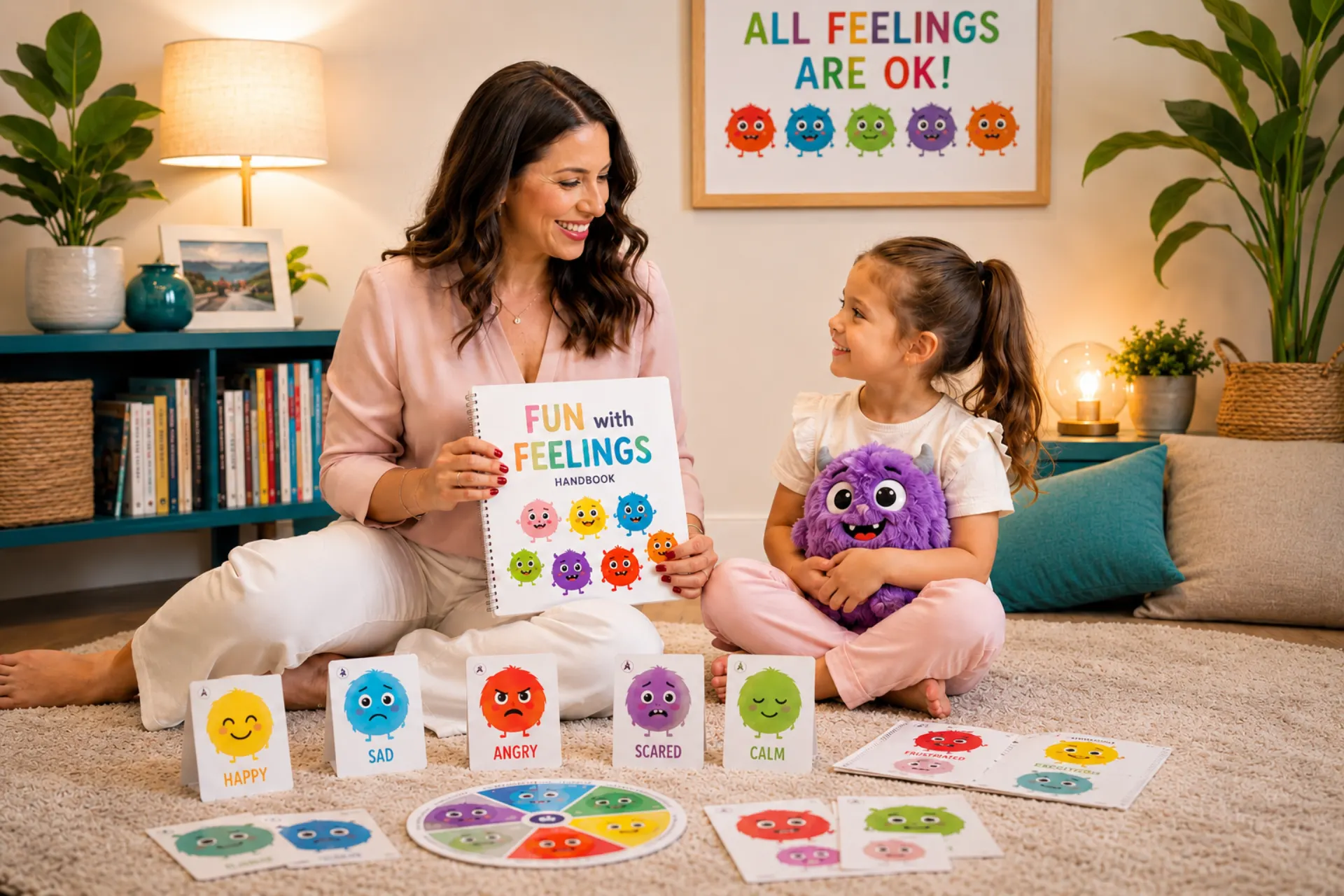
Understand. Name. Practise. Apply.
- 01
Understand
Parents and children begin building a shared understanding of emotions and how they show up.
- 02
Name
Children are supported to recognise and name what they're feeling, using visual supports and play.
- 03
Practise
Calming and coping strategies are introduced and practised together during sessions.
- 04
Apply
Families take gradual, manageable steps to apply strategies to real situations that come up at home.
- 05
Reinforce
Parents support and reinforce the skills between sessions, using structured workbook activities.
Why This Program?
What Makes This Program Different
Evidence-Informed
Developed by clinical psychologists Michelle Garnett, Tony Attwood and colleagues, drawing on cognitive and behavioural strategies.
Designed for Young Children
Built specifically for the developmental stage of 4-6 year olds, not adapted down from a program for older children.
Parent-Mediated
Parents are active participants throughout, not observers, and learn the strategies alongside their child.
Visual & Play-Based Learning
Structured activities, visual supports and play make abstract emotional concepts concrete for young children.
Neuroaffirming Approach
Strategies are tailored to each child's individual needs, including for neurodivergent children.
Research & Evidence
What Does the Research Tell Us?
Fun with Feelings was developed for autistic children experiencing anxiety, and the research below reflects that. It draws on parent-mediated, cognitive-behavioural approaches to anxiety and emotional development in young children. We describe it as evidence-informed rather than evidence-based: the only randomised trial in this area is small, and its primary result was not statistically significant.
A Randomised Trial in This Age Group
A randomised controlled trial of a parent-mediated cognitive behavioural group program for young children with autism and anxiety — run by two of the authors of Fun with Feelings — randomly assigned 31 children aged 4–6 to treatment or a waitlist. There was no significant difference between the groups immediately after treatment. Children who received the program did show a significant reduction in internalising behaviours, with a further, non-significant trend toward reduced anxiety symptoms at three-month follow-up. (Cook, Donovan & Garnett, 2019 )
Describing the Program Itself
A separate paper sets out how the Fun with Feelings program was developed and illustrates its use through a case example. It describes the program's structure and rationale rather than testing how well it works, so it should be read as program documentation, not as evidence of effectiveness. (Cook et al., 2020 )
Important Context
Research findings describe outcomes observed across groups of participants and do not predict how an individual child will respond. The published trial referred to above evaluated a parent-mediated CBT program for young autistic children and may not reflect every detail of the format currently offered by The Social Space. Participation does not guarantee a particular outcome, and program suitability is considered individually.
Flexible Delivery
Where This Program Can Be Delivered
Mascot Clinic
Delivered face-to-face in a supportive, structured environment at The Social Space Psychology Clinic.
Schools & Early Learning Centres
Available in selected settings to support real-world application, where appropriate.
Not every delivery format is available at every intake. Program availability, delivery format and intake dates may vary. Contact our team for current information.
Want to Learn More About Fun with Feelings?
Our team can discuss your child’s needs, whether the program may be suitable and upcoming availability.