
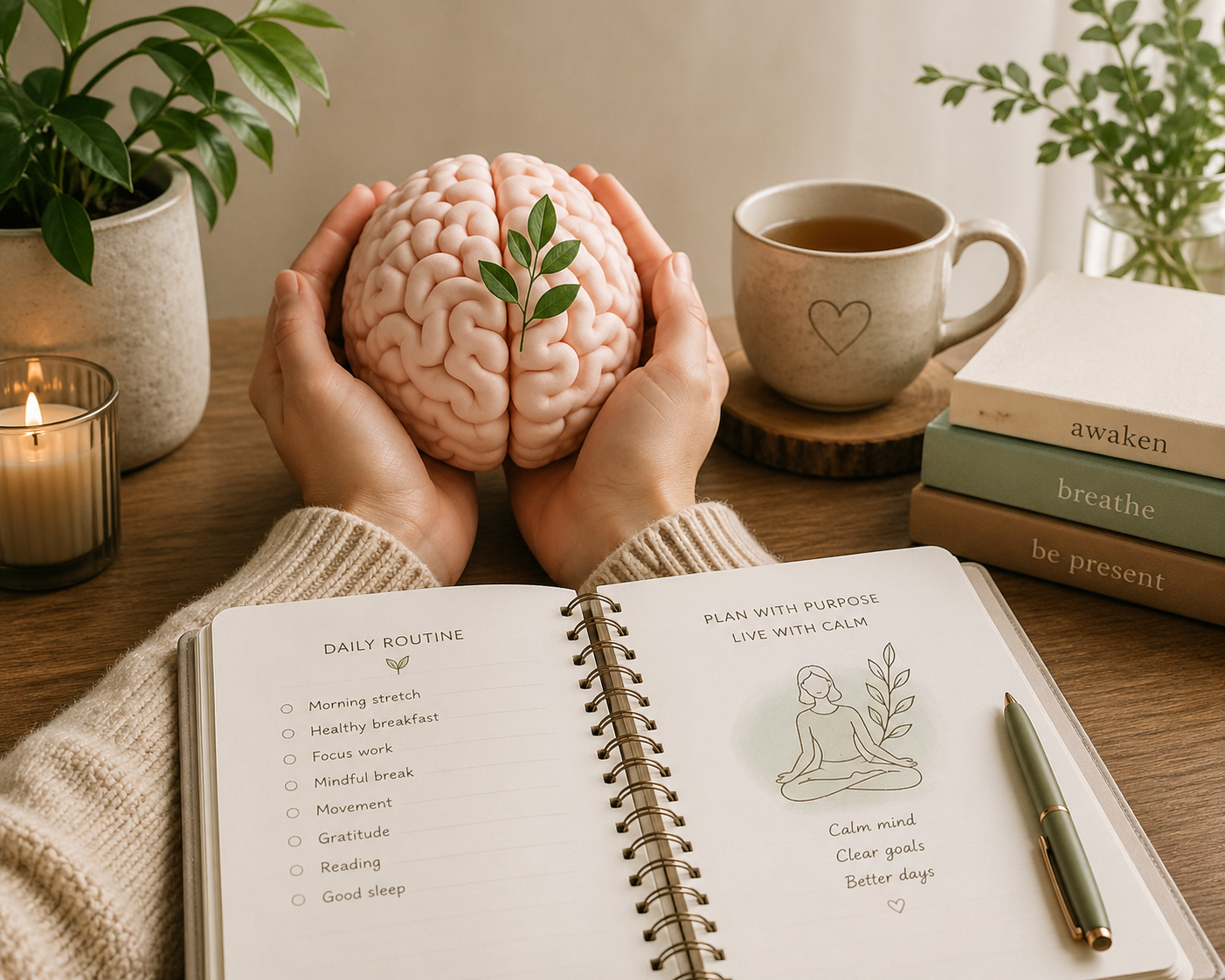
Many people think of routines as rigid schedules or strict rules, but in reality, routines are simply predictable patterns that help the brain understand what’s coming next. For children, teens and adults – neurodivergent or neurotypical – routines can play an important role in emotional wellbeing, stress reduction and daily functioning.
At The Social Space Psychology Clinic, we often talk about routines not as something people “should” follow, but as a supportive tool that helps the brain feel safe, organised and grounded. In this article, we explore why routines matter, how they support different age groups, and how families can create routines that feel flexible, realistic and affirming.
The Brain Loves Predictability
Human brains are wired to seek patterns. Predictability reduces the amount of information the brain needs to process, which lowers cognitive load and frees up mental energy for learning, problem‑solving and connection.
When the brain knows what to expect, it can:
- Prepare for transitions
- Reduce stress responses
- Focus more easily
- Recover more quickly from overwhelm
- Feel a greater sense of control
For many neurodivergent people, including autistic individuals and people with ADHD, predictability can be especially important. Unexpected changes, unclear expectations or sensory uncertainty can increase stress or lead to emotional overload. Routines help create a sense of stability in a world that can sometimes feel unpredictable.
Routines Are Not About Perfection
A common misconception is that routines must be strict or inflexible. In reality, routines work best when they are:
- Supportive
- Adaptable
- Realistic
- Individualised
A routine is simply a rhythm to the day not a rigid timetable. It can be as simple as having a consistent morning flow, a predictable after‑school structure, or a calming bedtime sequence.
The goal is not to remove spontaneity, but to create enough predictability that the brain feels anchored.
How Routines Support Children
Children thrive when they understand what’s happening next. Predictable routines help them:
- Transition between activities
- Build independence
- Reduce anxiety
- Understand expectations
- Develop emotional regulation skills
For neurodivergent children, routines can also support sensory needs. For example, knowing that quiet time happens after school can help a child prepare for sensory recovery. Having a consistent morning routine can reduce decision fatigue and help the day start more smoothly.
Visual schedules, timers and step‑by‑step prompts can also be helpful tools for children who benefit from clear, concrete information.
How Routines Support Teens
Teenagers often experience increasing demands academically, socially and emotionally. Routines can help teens:
- Manage schoolwork
- Balance screen time
- Build healthy sleep habits
- Navigate social commitments
- Reduce overwhelm
For neurodivergent teens, routines can also support executive functioning. Breaking tasks into smaller steps, using planners or digital reminders, and having predictable study times can reduce stress and support independence.
Importantly, routines for teens work best when they are created collaboratively. Teens are more likely to follow routines they’ve helped design.
How Routines Support Adults
Adults often juggle multiple responsibilities including work, family, relationships, health and daily tasks. Routines can help adults:
- Reduce decision fatigue
- Manage stress
- Support sleep and energy levels
- Maintain self‑care
- Create boundaries between work and rest
For neurodivergent adults, routines can also support sensory regulation, burnout prevention and task initiation. Many adults find that having predictable anchors in the day (such as a morning ritual, a consistent meal pattern or a wind‑down routine) helps them feel more grounded.
Routines and Emotional Regulation
Emotional regulation is closely linked to predictability. When the brain feels safe, it is easier to:
- Pause
- Reflect
- Problem‑solve
- Communicate needs
- Respond rather than react
When the brain feels uncertain or overwhelmed, it may shift into survival mode. Routines help reduce this stress response by creating a sense of safety and familiarity.
For children and teens, routines can also help adults anticipate moments when support may be needed such as after school, before bedtime or during transitions.
Creating Routines That Work for Your Family
Every family is different, and routines should reflect your household’s needs, strengths and preferences. Here are some principles that can help:
- Start small
Choose one part of the day to make more predictable – mornings, after school, or bedtime.
- Keep it visual
Visual schedules, checklists or simple icons can help children and teens understand the flow of the day.
- Build in flexibility
Routines should support your family, not restrict it. It’s okay for routines to shift when needed.
- Focus on connection
Routines work best when they include moments of warmth, communication and shared understanding.
- Review and adjust
As children grow or schedules change, routines may need to evolve.
How We Support Families at The Social Space
At The Social Space Psychology Clinic, we work with children, teens and adults to explore routines that feel supportive, realistic and affirming. Our approach is collaborative and strengths‑based, focusing on understanding each person’s needs and creating environments where they can thrive.
If you’d like to learn more about our services, programs or assessment pathways, our team is here to help.