
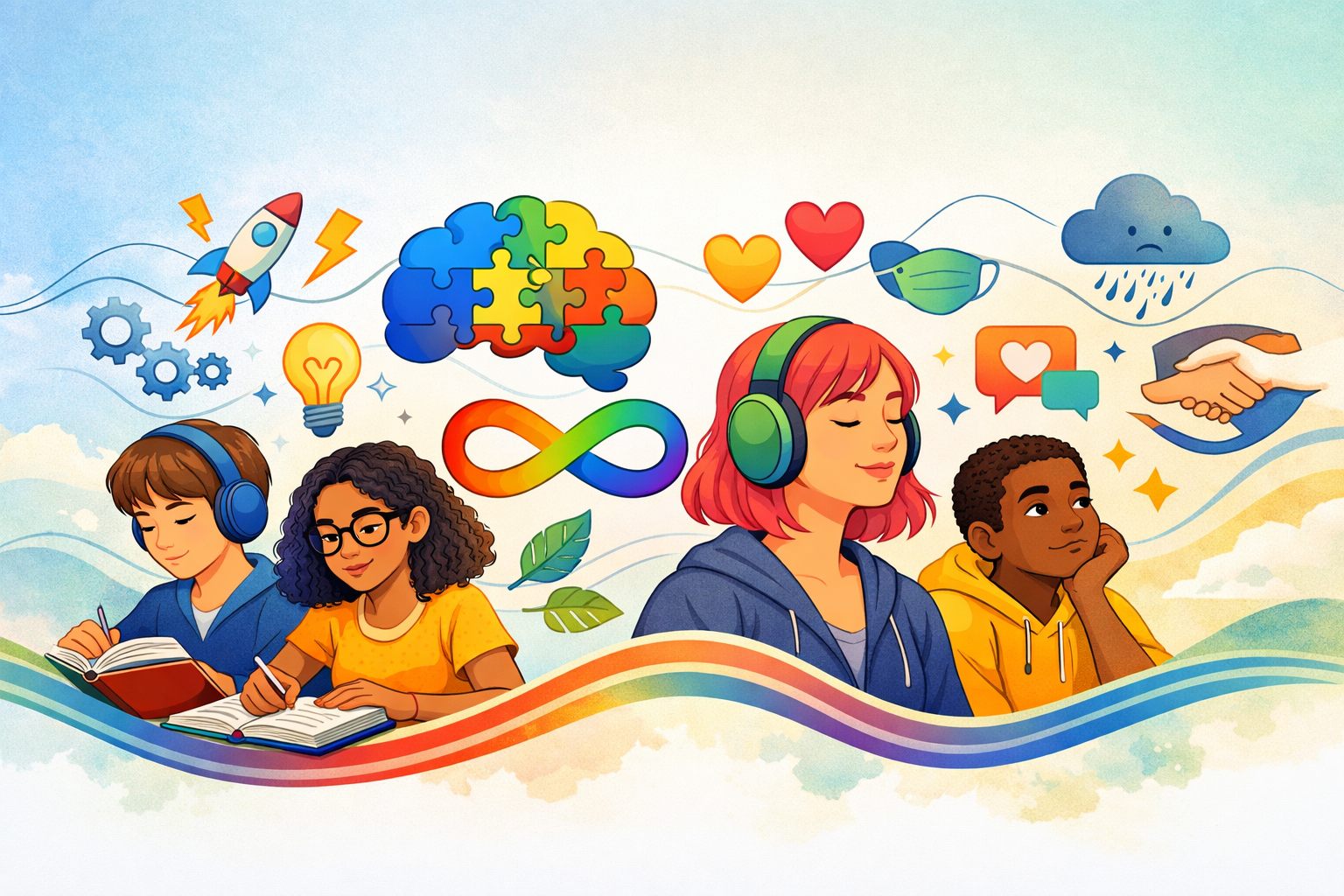
Many families recognise that their child, teen, or even themselves experience the world differently but they can’t always put language to it. Neurodivergent experiences such as ADHD, autism, AuDHD, sensory sensitivity, emotional intensity, or chronic overwhelm often show up long before anyone has a name for them. And when these experiences go unrecognised, they can feel confusing, frustrating, or even isolating.
This article explores some of the most common challenges people describe, why they happen, and how families can better understand and support the neurodivergent individuals in their lives.
ADHD Paralysis: When “Just Start” Isn’t Simple
Many people with ADHD describe moments where they know exactly what they need to do, but their brain and body simply won’t begin. This isn’t laziness or lack of motivation. It’s a freeze response that happens when the brain becomes overwhelmed by pressure, uncertainty, or too many steps at once.
Families often see:
- Difficulty starting tasks, even enjoyable ones
- Avoiding emails, messages, or small responsibilities
- Feeling guilty for “procrastinating”
- Jumping between tasks without finishing
Understanding this pattern helps reduce shame and opens the door to supportive strategies like breaking tasks down, reducing pressure, and offering gentle structure.
AuDHD: When Autism and ADHD Co‑Exist
Some people experience traits of both autism and ADHD. This combination can create a unique push‑pull effect that feels contradictory and exhausting.
Common experiences include:
- Craving routine but also needing novelty
- Feeling overwhelmed by sensory input but restless when things are quiet
- Deep focus at times, and scattered attention at others
- Needing downtime but finding it hard to switch off
These experiences aren’t “too much” or “not enough”, they’re simply two different neurological patterns interacting at once.
RSD: When Sensitivity Meets ADHD
Rejection Sensitive Dysregulation (RSD) describes the intense emotional response some people experience when they feel criticised, left out, or misunderstood. Even small moments like a neutral tone, delayed reply, or gentle feedback, can feel deeply painful.
This isn’t overreacting. It’s a nervous system that processes emotional pain very quickly and very intensely.
Families often notice:
- Strong reactions to perceived rejection
- Avoiding situations where they might disappoint someone
- Difficulty recovering from emotional hurt
- Feeling “too sensitive”
Understanding RSD helps families respond with compassion rather than confusion.
Depression: The Signs That Often Go Unnoticed
Depression doesn’t always look like sadness. For many people, it shows up as exhaustion, disconnection, or a loss of interest in things that once felt meaningful.
Common signs include:
- Feeling drained even after rest
- Going through the motions without feeling present
- Losing motivation or enjoyment
- Withdrawing socially
These signs don’t automatically mean someone is depressed, but they do signal that something in their wellbeing needs attention.
How Families Can Support Neurodivergent Loved Ones
Support doesn’t require fixing or changing someone. It starts with understanding.
Families can help by:
- Creating predictable routines
- Reducing pressure during moments of overwhelm
- Offering clear communication
- Allowing downtime without guilt
- Encouraging professional support when needed
Most importantly, neurodivergent individuals thrive when they feel seen, understood, and accepted.