When parents first reach out for support, they are often looking for help with something very real and immediate.
Their child may be anxious.
They may be struggling socially.
They may be melting down more easily, refusing school, or finding friendships hard to maintain.
And often, underneath it all, parents are asking the same question:
What is actually going to help my child in everyday life?
At The Social Space, this is one of the reasons we believe support needs to be more than just therapy.
Therapy can be an incredibly valuable part of a child’s growth. It can help children understand emotions, process experiences, and build insight. But for many children and teens, progress also happens through practice, connection, repetition, and real-life experiences.
That is why our approach extends beyond traditional one-to-one sessions. Whilst therapy is valuable, we also try to focus on helping children and teens develop practical skills they can actually use at school, with friends, in groups, and at home through other channels.
Because confidence, emotional regulation, and social success are not built through insight alone.
They are built through doing.
Why Real-Life Skill Building Matters
Children do not usually become confident because someone tells them to “just be brave,” “just calm down,” or “just be more social.”
They become confident through repeated experiences of:
- trying
- practising
- being supported
- making mistakes
- trying again
- and seeing themselves succeed
This is why support that includes real-life application is so powerful.
Children often need opportunities to practise:
- joining a conversation
- managing nervous feelings
- recovering after an awkward moment
- working with others
- staying in the group when things feel uncomfortable
- using calming strategies in the moment
These are not abstract ideas. These are everyday life skills.
And they are often learned best not only in therapy, but in group programs, social groups, structured workshops, and supported peer experiences.
PEERS®: Social Skills Taught in a Real-Life Way
One of the most powerful examples of this is the PEERS® Social Skills Program.
PEERS is effective because it does not assume children or teens will “just pick up” social skills naturally. Instead, it explicitly teaches the practical social strategies that socially successful people use every day.
This includes skills such as:
- starting conversations
- joining group conversations
- finding common interests
- handling teasing
- organising get-togethers
- managing conflict
- responding to rejection
- developing confidence in friendships
What makes PEERS especially valuable is that it is grounded in real-world social situations.
It is not just talking about friendship.
It is learning how friendship actually works.
For many children and teens, that is a game changer.
They are finally given a roadmap for situations that previously felt confusing, unpredictable, or discouraging. Instead of being told to “go make friends,” they are shown exactly how to take the next step.
And that clarity matters.
Because social confidence is not just about personality.
It is about having strategies.
Why Social Groups Matter
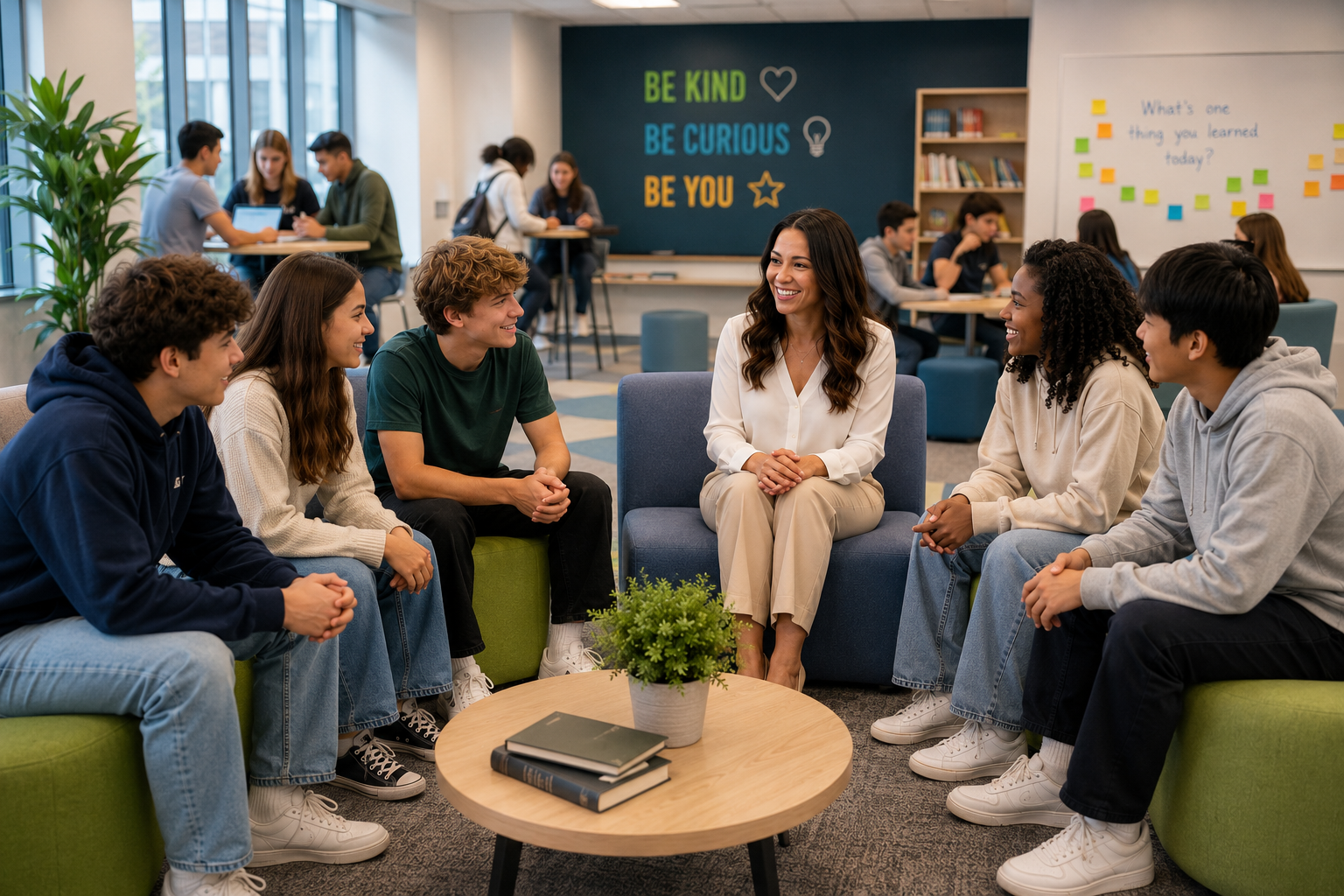
Social groups can also play a meaningful role in helping children build confidence and connection.
For some children, social confidence does not grow in isolated environments. It grows in spaces where they can:
- interact with peers regularly
- practise in a supported setting
- discover shared interests
- experience belonging
- and realise they are not the only one who feels this way
A well-run social group is not “just hanging out.”
It is an opportunity for children to develop:
- social awareness
- flexibility
- conversation skills
- confidence in groups
- emotional resilience
- and genuine connection with others
Importantly, these groups can provide a bridge between learning a skill and actually using it.
That bridge is often where the real growth happens.
Because once a child experiences, “I can do this,” their confidence starts to shift from something adults are encouraging… to something they are beginning to believe themselves.
More Than Therapy Means More Opportunities to Grow
This is why we see our work as broader than therapy alone.
Children and teens benefit from having multiple pathways into growth, depending on their needs, personality, and stage of development.
For some, one-to-one therapy is the right place to begin.
For others, group work, social clubs, workshops, or structured programs may be the most engaging and effective entry point.
And often, the strongest outcomes come from combining these supports.
Therapy can help children understand themselves.
Programs can help them build practical strategies.
Groups can help them practise those strategies with others.
Parent support can help reinforce those skills at home.
Together, this creates a model of care that feels more connected, more practical, and more relevant to everyday life.
Because children do not just need insight.
They need opportunities to apply what they are learning.
What People Really Need
Children and teens do not need to be “fixed.”
They need to feel:
- understood
- supported
- capable
- connected
- and equipped with the right skills
That is why a broader approach matters.
When we move beyond the idea that support must only happen through therapy, we open up more opportunities for children to learn in ways that are active, engaging, relational, and meaningful.
We create spaces where they can:
- build confidence through practice
- experience success with peers
- learn emotional regulation in real time
- and develop skills they can carry into everyday life
That is where real change happens.
Not only in understanding what is hard, but in learning what to do next.
Final Thoughts
At The Social Space, we believe support should feel practical, empowering, and connected to the real lives children are living.
That is why we value therapy deeply while also creating opportunities beyond therapy through:
- social skills programs
- social groups
- workshops
- parent support
- and structured, real-life learning experiences
Because growth happens not only through talking, but through doing.
And when children are given the right support, the right opportunities, and the right strategies, they can build:
- stronger emotional regulation
- greater social confidence
- deeper connection
- and a more genuine sense of wellbeing
If your child is struggling with anxiety, friendships, confidence, or emotional regulation, support is available — and it can look different for different children.
Sometimes the next step is therapy.
Sometimes it is a group.
Sometimes it is learning alongside peers.
Sometimes it is giving parents the tools to support change at home.
Often, it is a combination of all of these.
And that is exactly why support should be more than just therapy.