
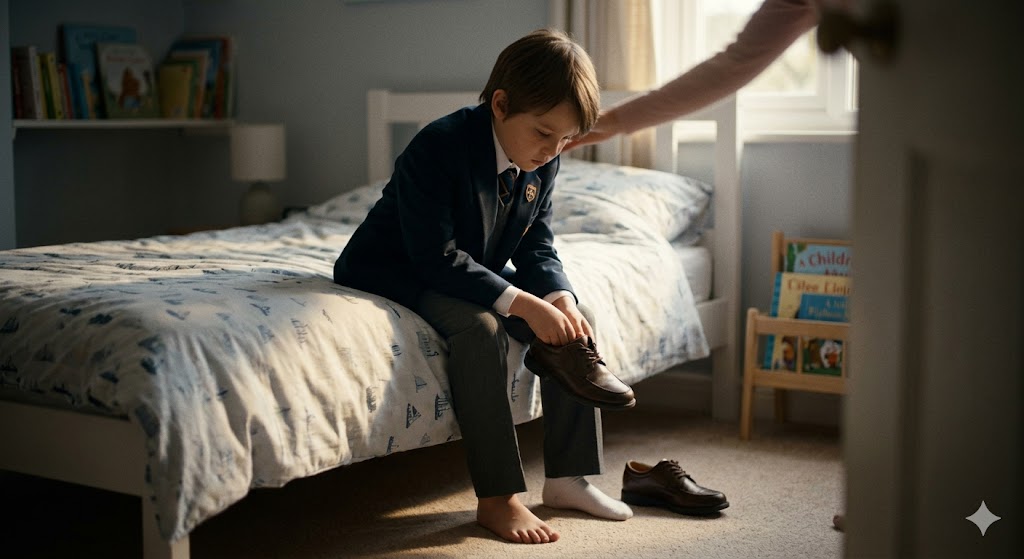
For many families, mornings can become one of the most stressful parts of the day.
What starts as gentle encouragement to get ready for school can quickly escalate into tears, resistance, or complete refusal to leave the house. Parents often describe feeling confused, frustrated, and worried:
“My child used to be fine — what changed?”
“Are they just avoiding school?”
“Why do they suddenly feel sick every morning?”
If this sounds familiar, you are not alone. School refusal is one of the most common concerns parents seek support for, and importantly – it is rarely about a child being “difficult” or “defiant.”
More often, it is a signal that something deeper is going on.
What Is School Refusal?
School refusal occurs when a child experiences significant difficulty attending school due to emotional distress.
This might look like:
- Crying, panic, or distress in the morning
- Complaints of stomach aches, headaches, or nausea before school
- Refusal to get dressed or leave the house
- Clinginess or difficulty separating from parents
- Frequent requests to stay home
To an outside observer, it can sometimes appear behavioural. But for many children, school refusal is driven by anxiety and overwhelm, not choice.
Why Does School Refusal Happen?
Children don’t wake up one day and decide they don’t want to learn. Instead, school refusal is often the result of a child feeling unable to cope with the demands of their environment.
Some of the most common underlying factors include:
1. Anxiety and Worry
Many children experience intense worries about:
- Making mistakes
- Being judged by peers
- Getting in trouble
- Performing academically
These worries can build over time, eventually becoming overwhelming.
2. Social Challenges
For some children, the hardest part of school isn’t the work – it’s navigating friendships.
They may struggle with:
- Knowing how to join in
- Understanding social cues
- Managing conflict or rejection
When social situations feel unpredictable, school can feel unsafe.
3. Sensory and Emotional Overload
Classrooms can be busy, noisy, and stimulating environments.
For children who are more sensitive to noise, movement, or unpredictability, this can lead to:
- Mental exhaustion
- Increased irritability
- Difficulty focusing
Over time, their nervous system can become overwhelmed before the school day even begins.
4. Transitions and Change
Changes such as:
- Starting a new school
- Moving class or teachers
- Changes in friendships
can increase anxiety and reduce a child’s sense of predictability and control.
“My Child Says They Feel Sick” — Is It Real?
One of the most common concerns parents raise is:
“My child says they feel sick every morning – but they’re fine on weekends.”
This can be confusing and sometimes frustrating.
However, these symptoms are very real.
When children feel anxious, their body activates the fight-or-flight response, releasing stress hormones. This can cause:
- Stomach aches
- Headaches
- Nausea
- Fatigue
So while there may not be a medical illness, the physical experience is genuine.
Understanding this shift from “they’re faking it” to “their body is overwhelmed” can be incredibly powerful for parents.
Why Forcing Doesn’t Work
When a child refuses school, the natural response is often to push harder:
- “You have to go.”
- “There’s nothing to worry about.”
- “Just get in the car.”
While this response comes from a place of care, it can unintentionally increase anxiety.
When a child feels overwhelmed, their brain is in survival mode. At that point, logic, reasoning, and consequences are far less effective.
Instead of building confidence, repeated forced experiences can reinforce fear.
What Actually Helps?
The goal is not simply to “get your child to school.”
The goal is to help your child feel capable, safe, and confident navigating the challenges that school presents.
Children benefit from learning practical, evidence-based strategies that socially confident and emotionally resilient individuals use every day.
These include:
1. Understanding Anxiety
Helping children recognise what anxiety feels like in their body and why it happens.
2. Learning Coping Strategies
- Breathing and grounding techniques
- Managing worry thoughts
- Building emotional awareness
3. Gradual Exposure
Supporting children to face challenges in small, manageable steps rather than overwhelming leaps.
4. Building Social Confidence
Learning how to:
- Start conversations
- Join groups
- Navigate friendships
5. Supporting Parents
Parents play a critical role in helping children feel safe and supported. Learning how to respond to anxiety, rather than react to behaviour, can make a significant difference.
Why Structured Programs Make a Difference
Many families find that structured, evidence-based programs provide the clarity and support needed to move forward.
Programs such as Cool Kids Anxiety Program are designed to:
- Teach children how anxiety works
- Build practical coping strategies
- Increase confidence in facing challenges
- Support parents with tools to guide their child
These programs don’t aim to eliminate anxiety entirely, because some level of anxiety is normal, but rather to help children manage it effectively and move forward despite it.
Final Thoughts
School refusal can feel overwhelming for both children and parents.
But it’s important to remember:
Your child is not trying to make life difficult.
They are trying to cope with something that feels difficult.
With the right support, children can learn the skills they need to:
- manage anxiety
- build confidence
- re-engage with school
- and feel more in control of their emotions
How We Can Help
At The Social Space Psychology Clinic, we support children and families experiencing:
- School refusal and school anxiety
- Emotional regulation difficulties
- Friendship challenges
- Anxiety and worries
Our evidence-based programs, including Cool Kids Anxiety Program, are designed to help children develop the same strategies socially confident and resilient individuals use every day.
If your child is struggling with school attendance or anxiety, we’re here to help.
👉 Get in touch with our team to learn more about how we can support your family.